CGHS Hearing Aid Reimbursement 2026: Rates and Rules
CGHS Hearing Aid Reimbursement 2026: Rates, Rules and Claim Process
Hearing loss affects many pensioners and serving government employees. A good digital hearing aid is expensive, so most people ask the same question: is a hearing aid covered under CGHS? The answer is yes, within a ceiling rate and a set procedure. This guide covers the rates, who can apply, the permission process, the documents needed and the mistakes that get claims rejected.
Is a Hearing Aid Covered Under CGHS?
Yes. Beneficiaries of the Central Government Health Scheme and the Central Services (Medical Attendance) Rules, 1944 can claim reimbursement for a hearing aid. The reimbursement is not unlimited. It is capped at a ceiling rate fixed by the Ministry of Health and Family Welfare. The rule is simple: reimbursement is limited to the ceiling rate or the actual cost of the hearing aid, whichever is less. If your hearing aid costs more than the ceiling, you pay the difference yourself. CGHS Hearing Aid Rates (Per Ear)
The current ceiling rates, fixed by the December 2020 order, are:
Digital BTE (behind the ear): Rs. 8,000 per ear
Digital ITC/CIC (in the canal / completely in the canal): Rs. 9,000 per ear
The same order removed the body-worn/pocket type and the analogue BTE categories, since they had become obsolete. In practice, you can now claim only for digital BTE and ITC/CIC devices.
The rate also covers accessories. The BTE cost includes the hearing mould, and the ITC/CIC cost includes the customized shell. You cannot claim these separately.
These rates are per ear. If both ears need a hearing aid, the ceiling applies to each ear, subject to what the ENT specialist recommends.
Who Can Claim?
The benefit is open to:
Central government pensioners with a valid CGHS card
Serving central government employees covered under CS(MA) Rules or CGHS
Employees of autonomous bodies covered under CGHS
Eligible dependent family members, as covered by the card
State government employees, ECHS ex-servicemen and employees of some public sector bodies follow different schemes with their own rates. This article covers CGHS and CS(MA) beneficiaries only.
Step-by-Step Process to Get Reimbursement
The sequence matters. The most common reason for rejection is buying the hearing aid before getting permission.
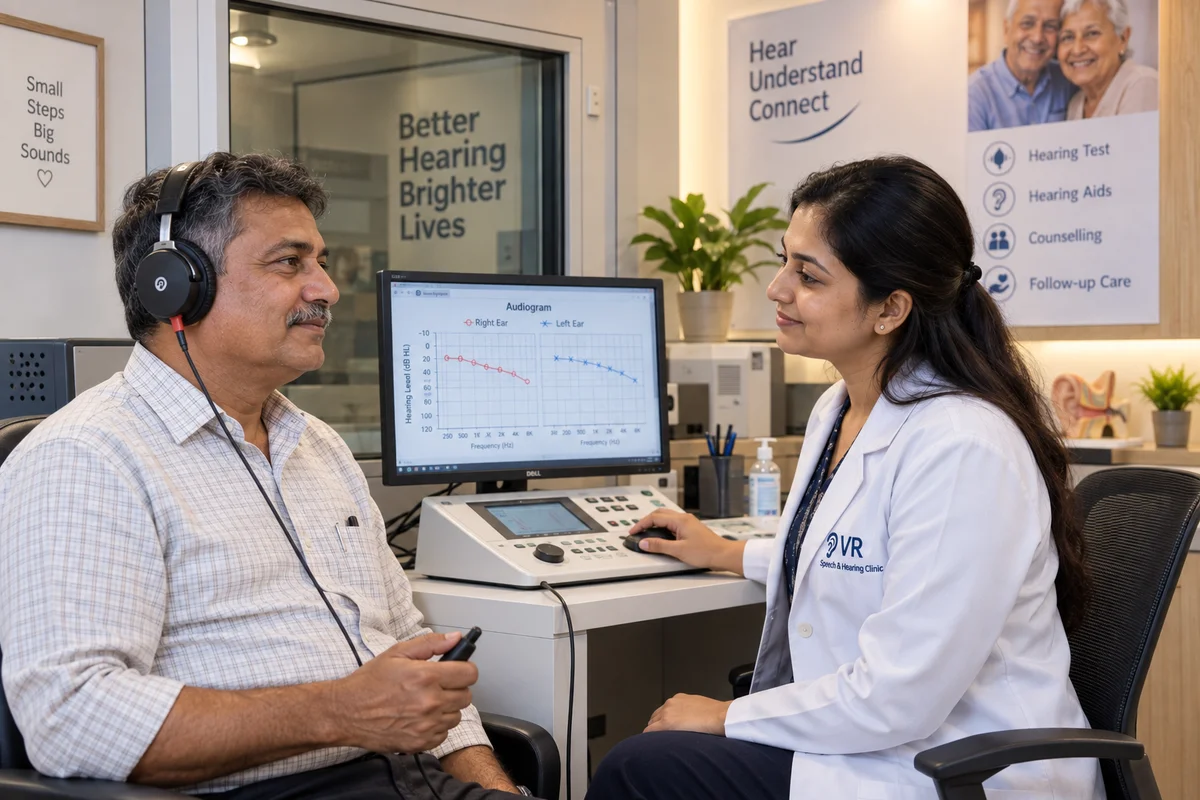
Step 1: Get an ENT consultation. Visit a CGHS or government ENT specialist, or an ENT specialist at a CGHS/CS(MA) empanelled hospital. The specialist assesses your hearing through audiometric and audiological tests.
Step 2: Get the recommendation. The specialist recommends the type of hearing aid best suited to you. The recommendation must follow the categories approved under CGHS and not a brand name. Do not ask for a specific brand on the prescription.
Step 3: Obtain permission to purchase. For pensioners, permission comes through the CGHS system, from the Additional Director (Zonal) as per the 2020 order. For serving employees and autonomous body staff, it comes from the Head of Department or Office. Earlier rules said permission is granted on the ENT specialist’s recommendation and an undertaking that the beneficiary has not been reimbursed for a hearing aid in the preceding five years
Step 4: Buy the hearing aid. Only buy after you hold the original permission letter. Choose a qualified seller and ask for a proper bill.
Step 5: Submit the claim. Pensioners submit the claim to the CGHS Zonal Office through the CMO in charge of the dispensary. Serving employees submit it to their Ministry, Department or Office, and autonomous body beneficiaries to their body. Use the prescribed medical reimbursement claim form.
Documents Required for the Claim
Keep these ready before you file:
Completed medical reimbursement claim form
Copy of the CGHS card
Original permission letter for purchase of the hearing aid
Original bill or receipt from the seller
ENT specialist’s recommendation and audiogram
Undertaking that no hearing aid reimbursement was taken in the last five years
Bank details for payment
Earlier circulars also asked for the seller’s name, qualification and RCI registration number on the bill, and for the empty box or carton with the label showing the product details. Many offices still ask for these, so keep the box and make sure the bill shows the model and serial number.
The Five-Year Rule and Replacement
A hearing aid reimbursed under CGHS is expected to last five years. Earlier orders allowed replacement after five years on a condemnation certificate from a technical expert and approval of a CGHS or government ENT surgeon. The 2020 order also refers to a five-year mandated life. If you need a replacement sooner, expect to need strong medical justification, and get written approval before buying.
Pensioner vs Serving Employee: What Differs?
The rates and eligibility are the same. The difference is the office that handles your paperwork:
Pensioners deal with the CGHS wellness centre and the Zonal Office.
Serving employees deal with their own department’s administration or accounts section.
Autonomous body staff deal with their organisation.
Pensioners outside Delhi should approach the nearest CGHS wellness centre or the CGHS officer in their city for local instructions.
How Much Will You Actually Get Back?
Say you buy a digital BTE hearing aid for Rs. 25,000 for one ear. The ceiling is Rs. 8,000, so you get Rs. 8,000 and bear Rs. 17,000. If you buy a basic digital BTE for Rs. 6,500, you get Rs. 6,500, the actual cost. For an ITC/CIC priced at Rs. 30,000, the reimbursement is Rs. 9,000.
Most good-quality hearing aids on the market cost more than the ceiling. Treat the reimbursement as a partial contribution. If you want a premium device, you pay the extra.
Cochlear Implants Under CGHS
Cochlear implants follow separate rules from hearing aids. They are meant for severe to profound hearing loss where there is little benefit from hearing aids. One circular lists one criterion as no appreciable benefit from hearing aids after six months of trial. For children with pre-lingual deafness, reimbursement under that circular is graded by age: full ceiling rate or actuals for ages 1 to 5, 80 percent for ages 5 to 10, and 50 percent for ages above 10 and below 16. Requests for permission go to the Director, CGHS. Confirm the current ceiling and eligibility with CGHS before you plan a surgery.
Common Mistakes That Lead to Rejection
Buying the hearing aid before receiving permission.
Prescription naming a brand instead of a category.
Missing original bill or permission letter (photocopies are not enough).
Bill without the model name and serial number.
Claiming again within five years without approval.
Delay in filing the claim. Submit it promptly after purchase.
Incomplete undertaking or missing CGHS card copy.
Practical Tips for Faster Approval
Call or visit the wellness centre first to confirm the current checklist.
Keep two sets of photocopies of every document.
Ask the ENT to write the type (digital BTE or ITC/CIC) and the ear clearly.
Keep the original box until the claim is settled.
Note the date of submission and follow up with the CMO or accounts section.
Buy from a registered, qualified audiologist or dispenser who gives a proper GST invoice.
Final Word
CGHS hearing aid reimbursement is a real benefit, but it works only if you follow the order: ENT recommendation, permission, purchase, then claim. The ceilings of Rs. 8,000 for digital BTE and Rs. 9,000 for ITC/CIC per ear may not cover the full cost, but they reduce the burden. Because circulars are revised from time to time, confirm the latest rates and forms with your CGHS wellness centre or office before you buy.
FAQs
1. Is a hearing aid covered under CGHS?
Yes. CGHS and CS(MA) beneficiaries can claim reimbursement up to the ceiling rate or actual cost, whichever is less.
2. What is the CGHS rate for a hearing aid?
Under the December 2020 order, the ceiling is Rs. 8,000 per ear for digital BTE and Rs. 9,000 per ear for digital ITC/CIC. Verify for any later revision.
3. Are analogue and body-worn hearing aids reimbursable?
No. These categories were removed as obsolete in the 2020 order.
4. Can pensioners claim hearing aid reimbursement?
Yes. Pensioners apply through their CGHS wellness centre and Zonal Office.
5. Do I need permission before buying?
Yes. Buy only after you receive the original permission letter, otherwise the claim can be rejected.
6. Can I claim for both ears?
The ceiling is per ear, and the ENT specialist decides what is medically needed. Ask for it to be stated in the recommendation.
7. How often can I claim?
Normally once in five years, with an undertaking that you have not been reimbursed in that period. Early replacement needs approval.
8. Is the cost of the ear mould extra?
No. The mould (BTE) or customised shell (ITC/CIC) is included in the ceiling rate.
9. Does CGHS cover cochlear implants?
Yes, under separate guidelines, with prior permission and eligibility conditions. Check current rules with CGHS.
10. Where do I submit the claim?
Pensioners submit through the CMO of their dispensary to the Zonal Office. Serving employees submit to their department or office.