Signia MaX: 4-DNN AI Hearing Aid
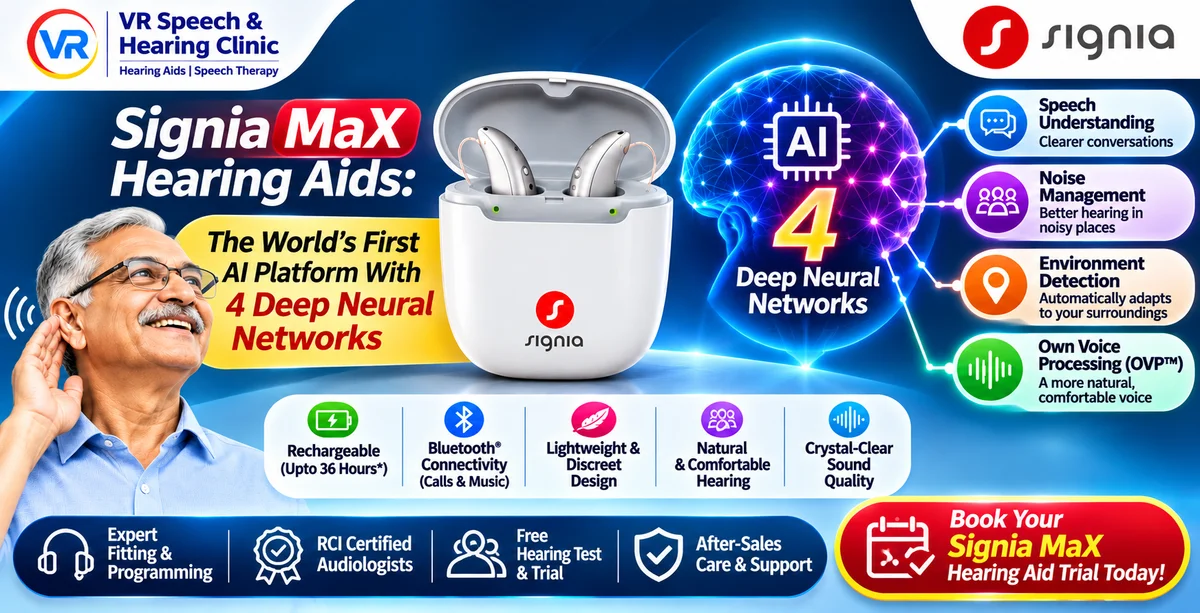
Signia MaX Hearing Aids: The World’s First AI Platform With 4 Deep Neural Networks
Anyone who wears hearing aids knows that a quiet chat across the table is easy. A busy restaurant, a family dinner or a crowded meeting is where the real test begins. Signia, part of WSA, has launched a new platform aimed at exactly these moments. It is called Signia Multi-adaptive Xperience, or Signia MaX, and it is billed as the first AI hearing aid platform built on four deep neural networks.
At VR Speech and Hearing Clinic, we follow new hearing technology closely so patients understand what is changing and what it means for daily life. Here is a clear look at Signia MaX and why it matters.
What Is Signia MaX?
Signia MaX introduces Acoustic Intelligence, a system that studies several dimensions of sound at once. Many earlier hearing aids used artificial intelligence mainly to reduce noise. That makes surroundings quieter, but it can also make the listener feel cut off from the conversation.
Signia MaX takes a wider approach. Instead of only suppressing background sound, it tries to understand the whole listening moment: who is talking, what noise is present, where you are, and whether you are the one speaking.
The platform was introduced to the Canadian market. Availability and models can differ by region, so it is worth asking a hearing care professional what is currently offered near you.
Four Deep Neural Networks Working Together
The core of Signia MaX is Acoustic Intelligence, which combines four task-specific deep neural networks (DNNs). Each is trained for one job:
Speech Detection: identifies and follows the voices you want to hear.
Own Voice Detection: recognizes when the wearer is speaking.
Scene Analysis: reads the surrounding environment.
Noise Processing: decides how to treat unwanted sound.
The key point is that these networks do not work in isolation. They share information continuously, so each sound decision reflects the full situation. A hearing aid that knows you are in a noisy cafe and also knows you are mid-conversation can respond very differently from one that only senses “noise.”
Four Core Features Powered by Acoustic Intelligence
The shared intelligence of the four networks drives four main features.
RealTime Conversation Enhancement. This feature finds and boosts several conversation partners at once in a lively group. Signia says it processes 75 percent more data points per second than the earlier Signia IX platform, which should help it keep up when people talk over one another.
Own Voice Processing. Many wearers find their own voice sounds odd or booming through hearing aids. This feature recognizes the wearer’s voice immediately and accurately, and it needs no calibration in the clinic. That means less setup time and a more natural experience from the start.
Ambient Scene Adaptation. Older systems sort sound into a few fixed categories, such as speech in quiet or speech in noise, and switch between preset programs. This feature instead keeps analyzing several characteristics of the environment and adapts continuously, so the settings follow the real world rather than a fixed menu.
Dynamic Noise Control. Rather than lowering all noise equally, it works out what the noise is, where it comes from, and whether you are in a conversation. It then adjusts noise reduction to suit. The aim is to keep you comfortable without losing the sense of being present in the room.
Better Performance in Noisy Group Conversations
Group conversation in noise is the hardest listening situation for most people with hearing loss, and it is where Signia MaX focuses its effort. According to the manufacturer’s white papers, 97 percent of wearers performed better in noisy group conversations with Signia MaX than with key competing products. Signia also reports that MaX ranks first for signal-to-noise ratio performance in this setting.
These figures come from the manufacturer’s own studies, so individual results will vary. Hearing loss, ear anatomy, lifestyle and expectations all shape the outcome. This is why a professional assessment and a proper trial matter as much as the technology.
Coordinated Processing Across Both Ears
Signia MaX also uses ultra-fast ear-to-ear communication so both hearing aids stay synchronized as the environment changes. Acoustic Intelligence then works as a binaural system, making quick, consistent decisions across both ears. This helps sound feel balanced and supports your brain’s ability to locate and focus on voices.
A Much More Powerful Chip
None of this would be possible without stronger hardware. The new Signia MaX chip delivers 54 times more processing power than the previous Signia IX generation. It is also 50 percent more energy efficient and has twice the memory. That combination allows the AI to run all day without draining the battery, which is a common concern with advanced features.
Meet the Signia Pure C&G MaX
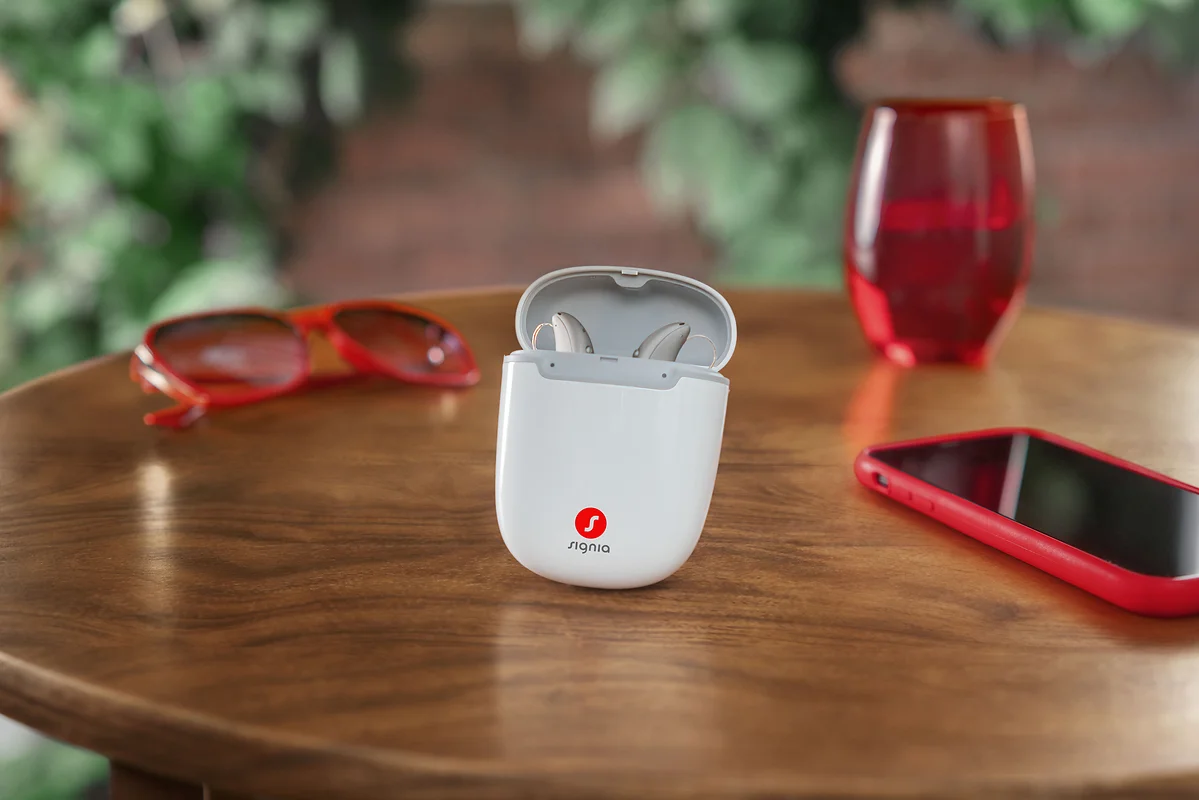
The first hearing aid on the new platform is the Pure C&G MaX, a receiver-in-canal (RIC) style device. It comes in eight colour options, so wearers can pick a look that suits their style.
Charging is designed for convenience:
A pocket-size portable charger stores up to four full charges.
A full charge takes about four hours.
Just 30 minutes of charging provides up to six hours of use.
This is helpful for people who travel, work long days or simply do not want to think about batteries.
Connectivity Built for Today and Tomorrow
The Pure C&G MaX includes OneConnect Technology, which supports Bluetooth Classic, LE Audio, Telecoil and Auracast. For clinicians, one platform can serve many patients with different needs, whether that means streaming calls and music, using loop systems in public places, or preparing for new shared audio technology.
Auracast is designed for shared and public audio, such as airports, gyms, theatres and venues with broadcast audio. Signia states that full Auracast functionality will arrive through a firmware update in the Signia One app by March 2027. Hearing aids that can be updated over time offer added confidence for people who plan to use them for years.
What This Means for Patients
For people with hearing loss, the biggest frustration is rarely volume. It is staying part of the conversation when many people talk and the room is noisy. Signia MaX is built around that problem. By combining speech, noise, environment and the wearer’s own voice, it aims to deliver hearing that feels more natural and less tiring.
It is still worth keeping expectations realistic. No hearing aid restores normal hearing, and the best technology only works well when it is fitted, tuned and supported by a qualified professional. A thorough hearing test, a discussion of your daily listening challenges and proper follow-up care are what turn good technology into real benefit.
Final Thoughts
Signia MaX, powered by Acoustic Intelligence, marks a notable step in AI hearing care. Four deep neural networks, a far more powerful chip, ear-to-ear coordination and broad connectivity all point to one goal: helping wearers stay connected in life’s busiest, noisiest moments.
If you are thinking about new hearing aids or want to understand your options, the team at VR Speech and Hearing Clinic is ready to help. Book a consultation to have your hearing evaluated and to find a solution that fits your lifestyle.
FAQs
1. What is Signia MaX?
Signia MaX, short for Multi-adaptive Xperience, is a hearing aid platform from Signia, part of WSA. It uses Acoustic Intelligence with four deep neural networks to analyze sound in several dimensions at once.
2. What are the four DNNs in Signia MaX?
They are Speech Detection, Own Voice Detection, Scene Analysis and Noise Processing. They share information in real time to guide sound decisions.
3. How is Signia MaX different from other AI hearing aids?
Many AI hearing aids apply AI mainly to noise reduction. Signia MaX looks at speech, noise, environment and the wearer’s own voice together, aiming to keep you connected to conversation rather than simply making things quieter.
4. Does Signia MaX work well in noisy places?
Signia reports that 97 percent of wearers performed better in noisy group conversations compared with key competitors. These are manufacturer-reported results, and individual experience may differ.
5. Which hearing aid is first on the Signia MaX platform?
The Signia Pure C&G MaX, a receiver-in-canal model available in eight colours.
6. How long does the Pure C&G MaX battery last?
A full charge takes about four hours, and 30 minutes of charging gives up to six hours of runtime. The portable charger holds up to four full charges.
7. Does Signia MaX support Bluetooth and Auracast?
Yes. OneConnect Technology supports Bluetooth Classic, LE Audio, Telecoil and Auracast. Full Auracast functionality is planned via a firmware update through the Signia One app by March 2027.
8. Does Own Voice Processing need clinic calibration?
No. Signia states that Own Voice Processing recognizes the wearer’s voice without in-clinic calibration.
9. Is Signia MaX suitable for everyone with hearing loss?
Suitability depends on your hearing test, ear shape, lifestyle and preferences. A hearing care professional can recommend the right option for you.
10. How can I find out if Signia MaX is right for me?
Book a hearing evaluation with VR Speech and Hearing Clinic to discuss your needs and explore suitable hearing solutions.