Bluetooth Hearing Aids Features, Benefits
Discover how Bluetooth hearing aids stream calls, music and TV straight to your ears. Learn features, benefits, costs and how to choose the right pair with EarMart.
Book a Free Consultation
We'll call you within 24 hours. Your details are safe with us.
Bluetooth Hearing Aids: The Complete Guide to Wireless Hearing
Hearing technology has moved far beyond simple sound amplification. Today, Bluetooth hearing aids connect directly to your smartphone, television, tablet and laptop, turning your devices into a personal sound system. If you have been thinking about upgrading your hearing or buying your first pair, this guide explains how Bluetooth hearing aids work, what to look for and how to choose the right option for your lifestyle.
What Are Bluetooth Hearing Aids?
Bluetooth hearing aids are modern hearing devices with built-in wireless connectivity. Like wireless earbuds, they pair with compatible devices and stream audio directly into your ears. Unlike ordinary earbuds, they also process everyday sounds around you, amplify what you struggle to hear and reduce unwanted background noise.
This means phone calls, music, podcasts, video meetings and television audio can travel straight to your hearing aids, clear and balanced to suit your hearing profile. For many users, this removes the frustration of holding a phone to the ear, turning the TV volume up too high or missing key words in a conversation.
How Do Bluetooth Hearing Aids Work?
Every hearing aid has a microphone, a processor, an amplifier and a receiver (speaker). Bluetooth hearing aids add a wireless chip that handles the connection to other devices.
When you pair your hearing aids with a smartphone, the phone sends the audio signal wirelessly to the hearing aids. The processor then adjusts the sound according to your personal hearing prescription, boosting the frequencies you find difficult to hear. The result is audio that is not just louder but tailored to you.
Most models also work with a companion smartphone app. Through the app you can change volume, switch listening programs, adjust bass and treble, and sometimes fine-tune settings for different environments such as restaurants, parks or busy streets.
Key Benefits of Bluetooth Hearing Aids
Hands-Free Phone Calls
Calls stream directly into both ears, and the built-in microphones pick up your voice. This makes conversations clearer and removes the need to hold the phone to your ear. It is especially helpful in noisy places or while driving with hands-free mode.
Better Television Experience
Many people with hearing loss raise the TV volume so much that family members are disturbed. With Bluetooth streaming, often through a small TV adapter, sound goes straight to your hearing aids, so you can follow dialogue at a comfortable level while everyone else enjoys normal volume.
Music, Podcasts and Audiobooks
Streaming music and spoken content directly to your hearing aids gives richer, clearer sound than playing it through a speaker. It also lets you enjoy entertainment privately.
Improved Video Calls and Meetings
Remote work and online classes rely on clear audio. Bluetooth hearing aids deliver voices from video calls directly to your ears, reducing strain and helping you stay engaged.
Discreet and Modern Design
Many Bluetooth hearing aids are small, sleek and comfortable. Because they look like modern wearable tech, many users feel more confident wearing them, which helps remove the stigma sometimes linked to hearing devices.
Remote Control and Personalization
Smartphone apps give you control without touching the devices. You can change settings quietly in any situation, which is useful in meetings, classrooms or social gatherings.
Types of Bluetooth Hearing Aids
Choosing the right style depends on your degree of hearing loss, dexterity, budget and preferences.
Behind-the-Ear (BTE): These sit behind the ear with a tube or wire leading to the ear canal. They suit mild to profound hearing loss, offer longer battery life and have room for more features and stronger amplification.
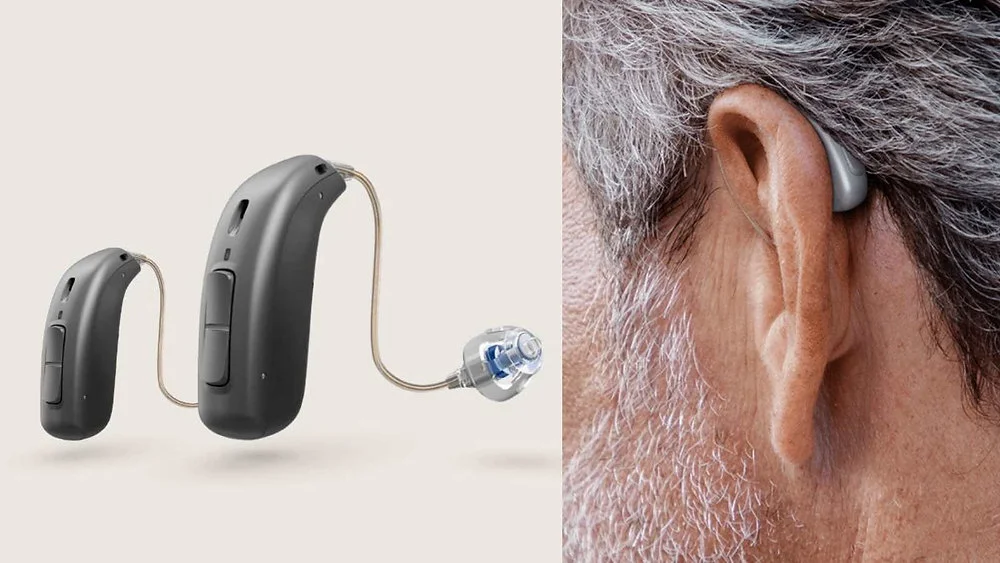
Receiver-in-Canal (RIC): A popular choice, RIC models have a small case behind the ear and a thin wire to a receiver in the ear canal. They are discreet, comfortable and offer excellent sound quality with strong Bluetooth performance.
In-the-Ear (ITE): Custom-moulded to fit within the outer ear, these are easy to handle and suit mild to severe hearing loss. Larger models can hold more connectivity features.
In-the-Canal (ITC) and Completely-in-Canal (CIC): These are small and nearly invisible. However, their tiny size can limit battery capacity and features, so Bluetooth options may be more limited.
Rechargeable vs. Battery-Powered Models
Many Bluetooth hearing aids now come with rechargeable batteries. A single overnight charge typically supports a full day of use, including streaming. Rechargeable models are convenient, reduce waste and avoid fiddling with tiny batteries, which is helpful if you have limited dexterity.
Battery-powered models still have fans because they let you swap in fresh batteries instantly, which suits people who travel often or may not have access to charging. Keep in mind that streaming uses more power, so battery life may be shorter than with non-streaming use.
Compatibility: Check Before You Buy
Not every Bluetooth hearing aid works with every phone in the same way. Some are designed for specific smartphone platforms, while others use newer wireless standards that support a wider range of devices. Before buying, confirm that the hearing aids are compatible with your phone, tablet and television. Ask about:
Direct streaming from your smartphone
Support for both Android and iPhone
Compatibility with TV adapters or accessories
Availability of a companion app
Support for newer low-energy audio standards
Choosing a hearing care provider who can explain compatibility clearly saves frustration later.
Features to Look For
When comparing Bluetooth hearing aids, consider these features:
Noise reduction: Helps you focus on speech in busy places.
Directional microphones: Pick up sounds from in front of you while limiting background noise.
Feedback cancellation: Prevents whistling sounds.
Multiple listening programs: Let you switch between quiet rooms, crowds and outdoor settings.
Telecoil: Connects to compatible loop systems in public venues.
Tinnitus support: Some models offer soothing sounds to help manage ringing in the ears.
Water and dust resistance: Important for everyday durability.
Find-my-device functions: Useful if a hearing aid is misplaced.
Who Should Consider Bluetooth Hearing Aids?
Bluetooth hearing aids suit a wide range of people, including professionals who take frequent calls, students attending online classes, seniors who want easier TV listening, and anyone who values convenience and modern design. They are also helpful for people who use their phones heavily for communication, navigation and entertainment.
If you notice that you often ask people to repeat themselves, struggle with phone calls, or find group conversations tiring, it may be time to get a hearing test and discuss connected hearing solutions.
How Much Do Bluetooth Hearing Aids Cost?
Prices vary widely based on technology level, brand, features and style. Basic connected models cost less, while premium devices with advanced processing, artificial intelligence features and extra accessories cost more. Remember to consider the full value: fitting, adjustments, follow-up care, warranty and servicing all matter as much as the device itself.
Compare options carefully, ask what is included in the price and choose a provider who offers after-sales support.
Tips for Getting the Most From Your Bluetooth Hearing Aids
Get a professional hearing test. A proper assessment ensures your hearing aids are programmed to your exact needs.
Allow time to adjust. Your brain needs a few weeks to adapt to hearing sounds you may have missed for years.
Keep devices updated. Update the app and firmware when new versions are available.
Clean them regularly. Wax and moisture can reduce performance. Use the recommended cleaning tools.
Charge them nightly. Build a habit of charging at the same time each evening.
Store them safely. Use a dry case when you are not wearing them.
Schedule check-ups. Regular visits keep your hearing aids performing at their best.
Why Choose EarMart for Bluetooth Hearing Aids?
Finding the right hearing aid should not feel confusing. EarMart focuses on making hearing solutions accessible, simple and reliable. Whether you are looking for a discreet rechargeable model, a feature-rich device for calls and streaming, or guidance on which style suits your lifestyle, EarMart helps you compare options with confidence.
With a customer-first approach, EarMart aims to help you understand the technology, match it with your hearing needs and enjoy clearer, more connected everyday listening.