Hearing Aid for 70 Year Old Chha. Sambhajinagar | EarMart
Find the best hearing aid for a 70 year old in Aurangabad. Compare prices, top brands, styles and buying tips with EarMart’s expert guidance.
Book a Free Consultation
We'll call you back. Your details are safe with us.
Hearing Aid for a 70-Year-Old in Aurangabad: Prices, Brands and How to Choose
If your father, mother or grandparent has started saying “what did you say?” more often, turning the TV volume up, or avoiding family gatherings, hearing loss may be the reason. It is very common after the age of 65, and at 70 it is often strong enough to affect daily life. The good news is that modern hearing aids are small, comfortable and far more advanced than they were a decade ago.
This guide explains what to look for when buying a hearing aid for a 70-year-old in Aurangabad (now officially Chhatrapati Sambhajinagar), including realistic price ranges, trusted brands, the best styles for seniors, and how EarMart can help you decide with confidence.
Why Hearing Loss Is So Common at 70
Age-related hearing loss, called presbycusis, develops slowly. The tiny hair cells in the inner ear wear out over time, and high-pitched sounds fade first. This is why many seniors can hear a deep voice but struggle with women’s and children’s voices, or cannot follow speech in a crowded room.
Common signs include:
Asking people to repeat themselves, increasing the TV or phone volume, difficulty following conversation in noisy places such as weddings or markets, missing the doorbell or phone ringing, ringing sounds in the ears, and withdrawing from conversations because it feels tiring.
Untreated hearing loss does more than make life inconvenient. Research has linked it with social isolation, low mood and faster cognitive decline in older adults. Early correction helps keep your loved one connected, safe and independent.
Start With a Proper Hearing Test
Never buy a hearing aid without a hearing evaluation. A pure tone audiometry test shows the degree of loss (mild, moderate, severe or profound) and which pitches are affected. Speech testing shows how clearly your parent understands words, not just how loudly they hear them.
The result decides which device, power level and style suit the person. A good clinic will also check the ear canal for wax or infection, since blocked ears can mimic hearing loss and need treatment before any device is fitted.
Best Hearing Aid Styles for a 70-Year-Old
Style matters as much as brand, especially for seniors who may have reduced finger dexterity or vision.
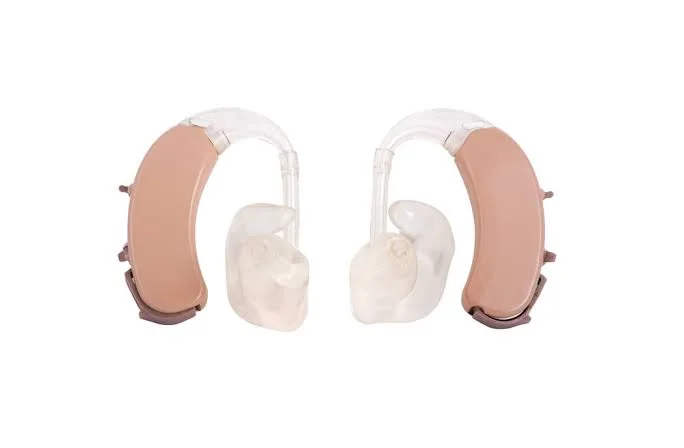
Behind-the-ear (BTE). The device sits behind the ear with a tube and earmold. It is powerful, durable, easy to handle and suits moderate to profound loss. It is often the best choice for seniors who need a simple, sturdy device.
Receiver-in-the-canal (RIC). A slim body sits behind the ear and a thin wire carries sound to a small speaker in the canal. It looks discreet, sounds natural and fits mild to severe loss. It is one of the most popular styles today.
In-the-ear (ITE) and in-the-canal (ITC). These are custom-made to fit the ear. They are less visible, but the small buttons and batteries can be difficult for older hands, and they may not suit severe loss.
Completely-in-canal (CIC) and invisible styles. These are very discreet but best suited to mild to moderate loss and to people with good hand control. They are usually not the first recommendation for a 70-year-old.
Rechargeable models. Many seniors prefer these because there are no tiny batteries to change. You simply place the aid in a charging case overnight. A full charge generally lasts a whole day.
Hearing Aid Prices in Aurangabad
Prices depend on technology level, brand, style and whether you buy one device or a pair. The figures below are approximate market ranges per ear in India, and actual prices vary by model and offer. Please confirm current pricing with the clinic.
Basic digital hearing aids: roughly ₹8,000 to ₹25,000 per ear. These suit quiet home environments and simple conversations.
Mid-range hearing aids: roughly ₹25,000 to ₹60,000 per ear. They offer better noise reduction, more channels and improved speech clarity.
Premium hearing aids: roughly ₹60,000 to ₹2,50,000 per ear. These include advanced sound processing, Bluetooth streaming to smartphones, rechargeable batteries, and automatic adjustment between environments.
Most people with hearing loss in both ears benefit from two devices, since this improves understanding in noise and helps with locating where sounds come from. Ask about pair discounts, warranty length and what is included in the price, such as fitting, follow-up visits and cleaning.
Popular Hearing Aid Brands Available in India
Several international brands are available through audiology clinics in Maharashtra.
Signia is known for natural sound and strong speech-in-noise features, with RIC and rechargeable models.
Phonak is a Swiss brand with a strong reputation, particularly for severe loss and for devices that connect easily to phones.
Oticon focuses on a full, natural sound experience and works well for people who like to hear everything around them.
ReSound offers reliable devices with good smartphone connectivity and comfortable designs.
Widex is known for clear, rich sound quality, often liked by music lovers.
Starkey and Unitron also offer dependable options across different price levels.
No single brand is best for everyone. The right choice depends on the type of loss, lifestyle, budget and how comfortable the person is with technology. A trial period is the best way to find out.
How to Choose the Right Hearing Aid for Your Parent
1. Match the device to the hearing test. Power and features should fit the loss, not the other way around.
2. Prioritise ease of use. Big controls, simple charging and clear instructions matter more than a long feature list. If your parent lives alone, simplicity is key.
3. Think about lifestyle. A person who mostly sits at home needs less than someone who attends temples, weddings and meetings. More social activity usually means better noise handling is worth the extra cost.
4. Ask about a trial. A trial period lets your parent test the device in real life, at home and outside. It is normal to need a few weeks to get used to amplified sound.
5. Check warranty and service. Hearing aids need regular cleaning, adjustments and occasional repairs. Local after-sales support is just as important as the device itself.
6. Make sure the fitting is done by trained staff. Even the best hearing aid performs poorly if it is programmed wrongly.
Tips to Help Your Parent Adjust
Many first-time users feel the world sounds loud or “tinny” at first. This is normal. The brain needs time to relearn sounds it has not heard for years.
Encourage them to wear the aids for a few hours daily at first, then build up to full-day use. Start in quiet rooms, then move to busier places. Keep follow-up appointments, since the clinic can fine-tune settings as your parent adapts. Clean the devices daily with a dry cloth, keep them away from moisture, and store them in a dry case at night.
Family patience helps enormously. Speak clearly, face your parent when talking, and avoid shouting. Reduce background noise during conversations.
Support for Hearing Aid Costs
Some families may be eligible for help. The Government of India’s ADIP scheme supports eligible persons with disabilities, including those with hearing impairment, in obtaining assistive devices. Some insurance plans and employer or retirement benefits may also cover part of the cost. Check eligibility with your local authorities or ask the clinic to guide you on documentation.
Why Families Choose EarMart
Buying a hearing aid is an emotional as well as a financial decision. EarMart focuses on helping families in Aurangabad make an informed choice, starting with proper testing, honest advice about which technology level is actually needed, and a range of trusted brands to compare. The team can explain the difference between styles, discuss pricing across budgets, and arrange demonstration and trial so your parent can hear the difference before committing. Follow-up care, fine-tuning and support are what turn a device in a box into a real improvement in daily life.
If someone in your family is 70 and struggling to hear, do not wait for the problem to get worse. Contact EarMart, book a hearing test, and take the first step towards clearer conversations.
Frequently Asked Questions
1. What is the best hearing aid for a 70-year-old?
It depends on the hearing test results. For most seniors, RIC or BTE rechargeable models are a good balance of clarity, comfort and ease of use. A hearing test and trial will confirm the best fit.
2. How much does a hearing aid cost in Aurangabad?
Prices generally range from about ₹8,000 to over ₹2,00,000 per ear depending on brand and technology. Basic models are at the lower end, while premium rechargeable models with Bluetooth cost more. Confirm exact prices with the clinic.
3. Which hearing aid brand is best in India?
Signia, Phonak, Oticon, ReSound and Widex are all well-regarded. The best brand is the one that suits your parent’s hearing loss, budget and comfort, which is why a trial is important.
4. Are rechargeable hearing aids good for senior citizens?
Yes. They remove the need to handle tiny batteries, which is helpful for people with weak vision or shaky hands. Most last a full day on one charge.
5. Do I need one hearing aid or two?
If both ears have hearing loss, two aids usually give better speech understanding, especially in noise, and more natural sound direction.
6. How long does it take to get used to a hearing aid?
Most people need two to six weeks of regular use to adapt. Gradual daily use and follow-up adjustments make the process easier.
7. Can hearing aids restore normal hearing?
No. They improve hearing and speech understanding but do not cure hearing loss. Used regularly, they can make a very big difference to daily life.
8. Is a hearing test necessary before buying a hearing aid?
Yes. A proper audiometry test is essential to choose the correct device and settings. Buying without one often leads to poor results.
9. How long do hearing aids last?
With proper care, most hearing aids last four to six years or more. Regular cleaning and servicing extend their life.
10. Where can I buy a hearing aid for my parent in Aurangabad?
You can visit a qualified hearing care provider such as EarMart for testing, brand comparison, trial and after-sales support.