Hearing Aids for Musicians Aurangabad | EarMart
Looking for hearing aids for musicians in Mall Road, Aurangabad? EarMart offers music-friendly hearing solutions, expert testing and personalised fitting.
Book a Free Consultation
We'll call you within 24 hours. Your details are safe with us.
Hearing Aids for Musicians in Mall Road, Aurangabad: A Complete Guide by EarMart
Music is built on listening. A tabla player listens for the smallest shift in a beat. A vocalist listens for pitch. A guitarist listens for tone and sustain. When hearing begins to change, it affects not just daily conversation but the very craft that defines a musician’s life.
If you are searching for hearing aids for musicians in Mall Road, Aurangabad, you are probably noticing that ordinary hearing devices do not capture the richness of music. This guide explains why musicians have unique hearing needs, what features to look for, and how EarMart helps performers and music lovers in Aurangabad (now officially Chhatrapati Sambhajinagar) get back to hearing music the way it was meant to be heard.
Why Musicians Face a Higher Risk of Hearing Loss
Musicians spend years close to loud sound. Rehearsal rooms, stage monitors, amplified instruments, dhol and drum sets, wedding bands and long studio sessions all add up. Research on professional musicians has repeatedly shown that they experience noise-induced hearing loss and tinnitus more often than the general population.
Common risk situations include:
Playing in small, echo-heavy rehearsal spaces
Performing close to speakers, monitors or percussion
Long hours at weddings, concerts and festival events
Studio work with headphones at high volume
Teaching music for years in noisy classrooms
Hearing damage is usually gradual. Many musicians do not notice it until they struggle to hear soft notes, miss lyrics in a group, or feel that their instrument “sounds different.” Early testing makes a real difference.
Why Regular Hearing Aids Are Not Always Enough for Music
Most hearing aids are designed first and foremost for speech. They amplify voices, reduce background noise and make conversation easier. That is excellent for daily life, but music is a very different signal.
Music has a wider dynamic range, meaning the gap between the softest and loudest sounds is large. It includes sustained notes, complex harmonics and sudden peaks. Standard speech-focused processing can treat music as “noise,” compress it or cut parts of it. The result may be flat, distorted or lifeless sound.
For a musician, this is more than an inconvenience. Tuning, timing, tone control and ensemble awareness all depend on accurate hearing. That is why choosing the right device, and having it programmed properly, is so important.
Features to Look for in Hearing Aids for Musicians
When you visit a hearing care specialist, ask about these music-friendly features.
1. A dedicated music program. Many modern hearing aids include a separate program that reduces aggressive noise suppression and preserves the natural character of instruments and voices.
2. Wide input dynamic range. Devices that handle loud peaks without distortion are ideal for drummers, brass players and anyone performing in loud environments.
3. Low distortion and high-quality sound processing. Clean processing keeps harmonics intact, which is critical for judging tone and pitch.
4. Adjustable compression and feedback control. Musicians often need softer compression settings, and good feedback management prevents whistling near amplifiers and monitors.
5. Open or custom-vented fittings. Proper venting can make your own instrument and voice sound more natural, reducing the “blocked ear” feeling.
6. Bluetooth and streaming support. Useful for practising with backing tracks, listening to recordings and taking calls without removing the devices.
7. Rechargeable batteries. Handy for long rehearsals, travel and performance days.
8. Compatibility with in-ear monitors. Some musicians need hearing support along with professional monitoring, and a specialist can guide the best setup.
Hearing Protection Is Just as Important as Hearing Aids
Not every musician needs hearing aids right away. Many only need prevention. Custom musician earplugs use special filters that lower volume evenly across frequencies, so music stays clear but at a safer level. Unlike foam plugs, which muffle sound, they preserve clarity.
For musicians in Aurangabad who play regularly at weddings, concerts, churches, temples, clubs or studios, protection today can prevent costly hearing problems tomorrow. A good hearing clinic will help you with both prevention and correction.
What to Expect During a Hearing Evaluation
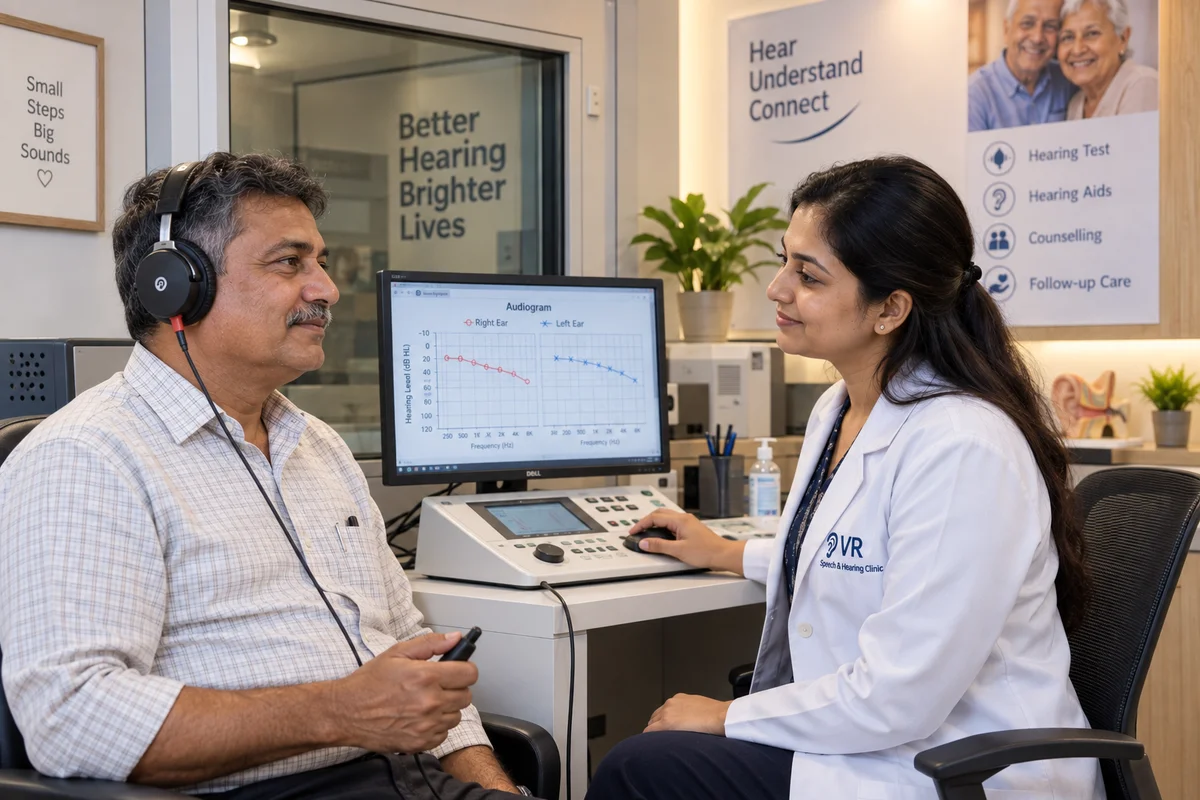
A proper evaluation for a musician goes beyond a basic hearing test. At EarMart, the process is focused on understanding how you listen and what you need to hear.
Step 1: Your listening history. You discuss your instrument, genre, performance schedule, practice routine and any ringing, muffled hearing or sensitivity to loud sounds.
Step 2: Hearing assessment. A thorough test measures your hearing across different pitches and volumes so that any change is clearly identified.
Step 3: Personalised recommendation. Based on your results and lifestyle, the specialist suggests the most suitable type of device or protection.
Step 4: Fitting and fine-tuning. Programming is adjusted for your needs, including a music setting if appropriate.
Step 5: Follow-up. Musicians often need a few adjustments after real-world use. Follow-up visits help refine the sound until it feels right in rehearsal and on stage.
Why Choose EarMart for Hearing Aids for Musicians in Mall Road, Aurangabad
Choosing a hearing care provider is a personal decision, especially when music is your profession or passion. EarMart focuses on helping people hear better with solutions matched to their individual lifestyle.
Here is what musicians value in a hearing care partner:
Personalised attention. Every musician hears differently, and every instrument stresses the ears in a different way.
A choice of solutions. From advanced hearing aids to protective options, you get guidance based on your needs rather than a one-size-fits-all device.
Careful programming. Fine-tuning matters more for musicians than for almost any other group of users.
A convenient central location. Mall Road is easy to reach for people across Aurangabad, making regular follow-ups simple.
Honest guidance. Not everyone needs the most expensive device, and a good specialist will tell you what actually suits your hearing and budget.
Tips for Musicians Using Hearing Aids
Once you have your devices, these habits help you get the most from them:
Practise with your hearing aids on, so your brain adapts to the new sound.
Use the music program during rehearsals and performances.
Tell your band members about your devices so they can help with monitor levels.
Keep your devices clean and dry, particularly after sweaty stage sessions.
Carry spare batteries or a charger when travelling to gigs.
Book regular check-ups, because hearing can change over time.
Signs You Should Get Your Hearing Checked
Do not wait for a serious problem. Consider a hearing test if you notice any of the following:
Ringing or buzzing in the ears after rehearsals or shows
Difficulty hearing lyrics or conversation in a group
Needing higher volume on headphones or monitors
Trouble judging pitch or tone as accurately as before
A feeling of muffled or blocked hearing after loud events
Sensitivity to sudden loud sounds
Early action protects both your hearing and your career.
Final Thoughts
Your ears are your most important instrument. Whether you are a classical vocalist, a wedding band guitarist, a drummer, a harmonium player or a music teacher, protecting and supporting your hearing keeps your passion alive.
If you are looking for hearing aids for musicians in Mall Road, Aurangabad, EarMart is ready to help you hear every note with confidence. Book a hearing evaluation today and take the first step toward richer, clearer, more natural sound.
Frequently Asked Questions (FAQs)
1. Can musicians wear hearing aids while performing?
Yes. Many musicians perform with hearing aids, especially models with a dedicated music program and low-distortion processing. Proper fitting and programming make a big difference.
2. Do hearing aids make music sound different?
Standard settings may alter music because they are tuned for speech. Music-focused programming helps keep sound more natural and balanced.
3. How do I know if I need hearing aids as a musician?
Signs include difficulty hearing soft notes, trouble understanding lyrics, ringing in the ears and needing higher volume. A professional hearing test will confirm whether you need support.
4. Are musician earplugs different from normal earplugs?
Yes. Musician earplugs reduce volume evenly across frequencies, so music remains clear, while ordinary foam plugs muffle sound.
5. Can hearing aids cure hearing loss?
No. Hearing aids do not cure hearing loss, but they help you hear sounds you would otherwise miss and improve everyday and musical listening.
6. How often should musicians get their hearing tested?
Once a year is a good guideline for regular performers, or sooner if you notice any change, ringing or discomfort.
7. Can hearing aids work with in-ear monitors?
In many cases a combined solution is possible, but it depends on your hearing and equipment. A specialist can recommend the best setup.
8. Where can I find hearing aids for musicians in Mall Road, Aurangabad?
You can visit EarMart for a hearing evaluation and personalised recommendations suited to musicians and music lovers.