Hearing Aids in Hinjewadi Phase 1, Pune
Looking for hearing aids in Hinjewadi Phase 1, Pune? EarMart offers hearing tests, trusted brands, expert fitting and aftercare. Hear clearly again.
Book a Free Consultation
We'll call you within 24 hours. Your details are safe with us.
Hearing Aids in Hinjewadi Phase 1, Pune: Your Complete Guide to Better Hearing with EarMart
Hinjewadi Phase 1 is one of Pune’s busiest IT hubs. Professionals, families and senior citizens live and work here, and many of them quietly struggle with hearing loss. If you are searching for hearing aids in Hinjewadi Phase 1, Pune, this guide explains how hearing aids work, which types suit different needs, what to look for in a clinic, and how EarMart can help you hear clearly again.
Why Hearing Health Matters More Than You Think
Hearing is tied to your work, relationships, safety and mental well-being. When it fades, you may start avoiding conversations, miss important details in meetings or feel left out at family gatherings. Untreated hearing loss has also been linked to social withdrawal, fatigue and difficulty concentrating.
In a fast-paced area like Hinjewadi, where long commutes, noisy traffic, video calls and open-plan offices are part of daily life, healthy hearing is essential. Early attention to hearing problems usually leads to better results and an easier adjustment to hearing aids.
Common Signs You May Need a Hearing Aid
Many people notice hearing loss only after it has affected their daily life. Consider a hearing check if you:
Often ask people to repeat themselves
Find it hard to follow conversations in restaurants, offices or crowded places
Turn the TV or phone volume higher than others prefer
Struggle to understand speech on phone or video calls
Feel that people mumble when they speak
Hear ringing or buzzing in your ears
Feel tired after listening for long periods
Miss doorbells, alarms or notifications
If several of these sound familiar, a professional hearing test is the right next step.
What Is a Hearing Aid and How Does It Work?
A hearing aid is a small electronic device that picks up sound through a microphone, processes it, and delivers it to your ear at a level suited to your hearing loss. Modern digital devices go well beyond simple amplification. They can reduce background noise, focus on speech, control feedback and adjust automatically to different environments.
Hearing aids do not restore normal hearing, but a well-fitted, properly programmed device can make speech clearer, conversations easier and daily life far more comfortable.
Types of Hearing Aids Available in Hinjewadi Phase 1
The best hearing aid depends on your degree of hearing loss, lifestyle, budget and comfort. Here are the main styles.
Behind-the-Ear (BTE): These sit behind the ear and connect to an earpiece or mould. They are durable, powerful and suitable for mild to profound hearing loss, and they are easy to handle.
Receiver-in-the-Canal (RIC): A slim, discreet design where the speaker sits in the ear canal. RIC devices are popular for mild to severe loss and offer natural sound quality.
In-the-Ear (ITE): Custom-made to fit the outer ear. They suit people who want easier handling without a behind-the-ear component.
In-the-Canal (ITC) and Completely-in-Canal (CIC): Small, discreet devices for mild to moderate hearing loss. They are nearly invisible but may have fewer features and need careful handling.
Rechargeable Hearing Aids: These remove the need to change tiny batteries. They are convenient for busy professionals and for seniors who find battery changes difficult.
Bluetooth-Enabled Hearing Aids: These connect to smartphones for calls, music and video meetings, which is useful if you work in an IT environment.
Key Features to Look For
When choosing hearing aids in Hinjewadi Phase 1, Pune, compare features that match your daily routine:
Noise reduction for traffic, offices and crowded places
Speech enhancement to make voices clearer
Directional microphones to focus on the person in front of you
Feedback control to prevent whistling
Rechargeable batteries for convenience
Smartphone connectivity for calls and streaming
Tinnitus support if you hear ringing or buzzing
Water and dust resistance for Pune’s monsoon and everyday wear
A good audiologist or hearing care specialist will explain which of these matter for you, rather than pushing the most expensive option.
What to Expect During a Hearing Evaluation
A proper hearing assessment is the foundation of successful hearing aid use. A typical visit includes:
A conversation about your history, including symptoms, work environment, medical background and lifestyle
An ear examination to check for wax or other visible issues
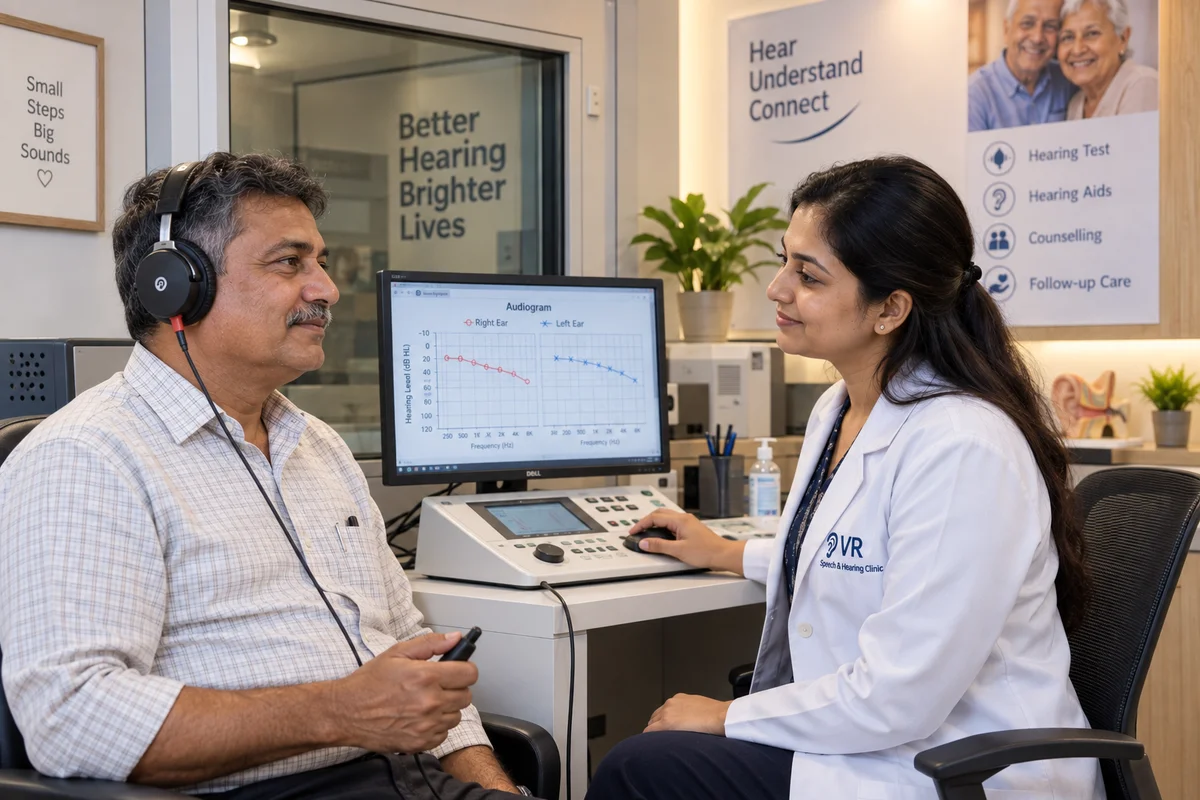
A hearing test (audiometry) to measure which sounds you hear and at what levels
Speech testing to see how well you understand words
Personalised recommendations based on your results and needs
A demonstration, so you can experience the difference before you decide
If something suggests a medical condition, you may be advised to consult an ENT specialist first. A responsible clinic will always put your health ahead of a sale.
Why Choose EarMart for Hearing Aids in Hinjewadi Phase 1, Pune
Choosing a hearing care provider is as important as choosing the device. EarMart focuses on helping people hear better with honest guidance and dependable support. Here is what you can look for:
Honest, Personalised Advice: Every person’s hearing is different. EarMart’s approach is to understand your hearing needs, budget and lifestyle before suggesting a solution.
Trusted Hearing Aid Brands: A good provider offers a range of reliable, well-known technologies so you can compare options and find the right balance of performance and value.
Proper Fitting and Programming: A hearing aid works well only when it is programmed to your hearing profile. Careful fitting and fine-tuning make the difference between a device that sits in a drawer and one you wear every day.
Aftercare and Support: Adjusting to hearing aids takes time. Follow-up visits, cleaning guidance, adjustments and troubleshooting help you get the most from your investment.
Convenient Location for Hinjewadi Residents: Whether you live in Phase 1, work in a nearby tech park or are visiting a family member, easy access means you are more likely to attend follow-ups.
Tips for Adjusting to Your First Hearing Aid
Your brain needs time to relearn sounds, so be patient. These habits help:
Wear them consistently. Start with a few hours a day and increase gradually.
Start in quiet places. Practise at home before trying noisy environments.
Ask for follow-up adjustments. Small tweaks can greatly improve comfort.
Keep them clean and dry. Wipe them daily and store them safely.
Involve family. Ask loved ones to speak clearly and face you while talking.
Be realistic. Everyday sounds may seem loud at first, and this usually settles over a few weeks.
How Much Do Hearing Aids Cost in Pune?
Prices vary widely based on technology level, style, brand and features. Basic digital models are generally more affordable, while advanced rechargeable devices with Bluetooth and artificial intelligence features cost more. Rather than choosing on price alone, think about the value you receive: accurate testing, proper fitting, warranty, servicing and long-term support.
Ask any clinic about warranty terms, repair policies, loss and damage cover, and what follow-up services are included. Clear answers are a sign of a trustworthy provider.
Hearing Care for Seniors and Working Professionals
For senior citizens: Easy-to-use, comfortable devices with simple controls and rechargeable options can make a major difference to independence and family communication.
For working professionals: Clear speech in meetings, reliable phone and video call performance and discreet designs matter most. Modern devices can support all of these.
For children and teenagers: Early detection is critical for speech and learning. A hearing test is advised if a child seems inattentive or has delayed speech.
Protecting Your Hearing Every Day
Prevention is as important as treatment. Simple habits protect your ears:
Keep headphone volume at a moderate level
Take listening breaks during long calls
Avoid inserting objects into your ears
Use ear protection around loud machinery or events
Get a hearing check-up regularly, especially after the age of 50 or if you notice changes
Take the First Step Toward Better Hearing
Hearing loss is common and treatable. You do not have to miss out on conversations, work opportunities or precious family moments. If you are looking for hearing aids in Hinjewadi Phase 1, Pune, book a hearing test with EarMart and get clear, honest guidance on the best solution for you.
Frequently Asked Questions (FAQs)
1. Where can I find hearing aids in Hinjewadi Phase 1, Pune?
You can visit a hearing care provider such as EarMart that offers hearing tests, a choice of hearing aid brands, fitting and aftercare for residents and professionals in the Hinjewadi area.
2. How do I know if I need a hearing aid?
If you frequently ask people to repeat themselves, struggle in noisy places, or turn up the volume more than others, you should get a hearing test. An audiologist can confirm whether a hearing aid will help.
3. Is a hearing test painful?
No. A hearing test is painless and non-invasive. You listen to sounds through headphones and respond when you hear them. It usually takes a short time.
4. Which type of hearing aid is best for me?
It depends on your hearing loss, ear shape, lifestyle and budget. RIC and BTE models are popular for many users, while smaller models suit mild loss. A specialist can recommend the right one after testing.
5. Are rechargeable hearing aids worth it?
For many people, yes. They remove the need to buy and change tiny batteries, which is especially helpful for seniors and busy professionals.
6. How long does it take to get used to hearing aids?
Most people adjust within a few weeks, though it can take longer. Wearing them regularly and attending follow-up visits speeds up the process.
7. Can hearing aids work with my smartphone?
Many modern hearing aids support Bluetooth, allowing calls, music and video meetings to stream directly to your ears.
8. How long do hearing aids last?
With proper care, most hearing aids last around four to six years or more. Regular cleaning and servicing extend their life.
9. Do hearing aids cure hearing loss?
No. They do not cure hearing loss, but they make sounds and speech clearer and help you take part in daily life more comfortably.
10. How often should I get my hearing checked?
Adults are advised to have a check-up every one to two years, especially after 50, or sooner if you notice any change in your hearing.