Hearing Aids in Pimple Nilakh, Pune | EarMart
Looking for hearing aids in Pimple Nilakh, Pune? EarMart offers hearing tests, expert fitting and modern digital hearing aids. Book a consultation today.
Book a Free Consultation
We'll call you within 24 hours. Your details are safe with us.
Hearing Aids in Pimple Nilakh, Pune: A Complete Guide to Better Hearing with EarMart
Hearing is one of the senses we take for granted until it starts to fade. A missed word in a conversation, a TV volume that keeps creeping up, or a phone call that suddenly feels difficult can all be early signs of hearing loss. If you live in or near Pimple Nilakh, Pune, finding the right hearing aids and the right audiology support can change how you connect with family, friends and colleagues.
This guide explains how hearing aids work, how to know whether you need one, what types are available, and how EarMart can help you hear clearly again.
Why Hearing Care Matters in a Growing Area Like Pimple Nilakh
Pimple Nilakh is one of the most active residential neighbourhoods on the Pune side of the Pimpri-Chinchwad belt. It has busy roads, growing housing societies and a mix of working professionals, young families and senior citizens. Daily noise from traffic, construction and crowded public spaces can put extra strain on ears, and age-related hearing loss is common among older residents.
Untreated hearing loss is not just an inconvenience. Research has linked it with social withdrawal, fatigue, reduced confidence and a higher risk of cognitive decline. The good news is that modern hearing aids are discreet, comfortable and highly effective, especially when they are fitted by trained professionals.
Common Signs You May Need a Hearing Aid
Hearing loss usually develops gradually, so many people do not notice it right away. You may benefit from a hearing check if you:
Often ask people to repeat themselves
Struggle to follow conversations in restaurants, weddings or meetings
Turn the TV or phone volume higher than others prefer
Find it hard to understand women’s or children’s voices
Hear ringing or buzzing in your ears (tinnitus)
Feel tired after long conversations because you are concentrating so hard
Avoid social gatherings because listening feels stressful
Miss the doorbell, phone ringing or alarms
If several of these sound familiar, a professional hearing test is the right next step. Early action leads to better results, because the brain adapts more easily to amplified sound when hearing loss is caught sooner.
How Hearing Aids Work
A hearing aid is a small electronic device that picks up sound through a microphone, processes it with a digital chip and delivers amplified sound into your ear through a tiny speaker. Today’s devices do much more than make sounds louder. They can:
Separate speech from background noise
Reduce wind noise and sudden loud sounds
Adjust automatically to different environments
Connect to smartphones and TVs through Bluetooth
Offer rechargeable batteries for everyday convenience
A well-programmed hearing aid is customised to your specific hearing profile, which is why a proper hearing test and professional fitting matter far more than the device alone.
Types of Hearing Aids Available
Choosing the right style depends on your degree of hearing loss, ear shape, lifestyle and budget. These are the main types people consider.
Behind-the-Ear (BTE): These sit behind the ear and are connected to an earmould or tube. They are powerful, durable and suitable for mild to profound hearing loss. They are often recommended for seniors and for people who want easier handling.
Receiver-in-Canal (RIC): A popular choice for its small size and natural sound quality. The receiver sits inside the ear canal while the main body rests behind the ear. It suits mild to severe hearing loss.
In-the-Ear (ITE): These are custom-made to fill part of the outer ear. They are easy to insert and often include features such as directional microphones.
In-the-Canal (ITC) and Completely-in-Canal (CIC): These are small, discreet devices that sit partly or fully inside the ear canal. They are ideal for people who value a nearly invisible look and have mild to moderate hearing loss.
Rechargeable Hearing Aids: Many models now come with rechargeable batteries, so you do not have to keep buying and replacing tiny batteries. They are especially helpful for people with limited dexterity.
An audiologist can help you decide which style fits your hearing needs and your daily routine.
What to Expect at a Hearing Test
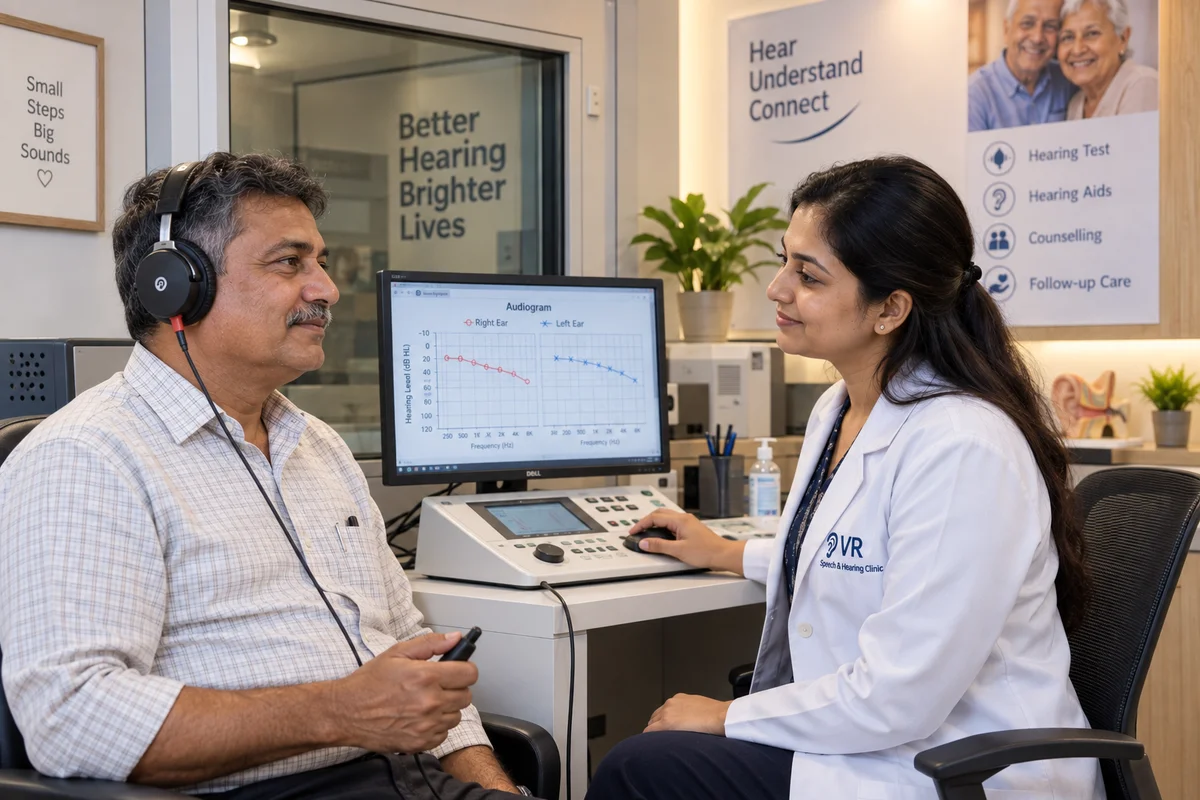
A hearing assessment is simple, painless and usually takes less than an hour. It typically includes:
A conversation about your history: Your symptoms, lifestyle, medical background and the situations where you struggle most.
An ear examination: To check for earwax, blockages or visible issues in the ear canal.
Pure tone audiometry: You listen to tones at different pitches and volumes and respond when you hear them. This maps your hearing levels.
Speech testing: This checks how clearly you understand spoken words, which is just as important as hearing tones.
Explanation of results and recommendations: You will be told whether you need hearing aids, medical referral or simply monitoring.
If a hearing aid is advised, the fitting process begins with selecting the right device and programming it for your hearing profile.
Why Professional Fitting and Aftercare Matter
Buying a hearing aid is not like buying a gadget off the shelf. Your ears, hearing loss and listening needs are unique. Good hearing care includes:
Accurate programming based on your test results
Fine-tuning after you try the device in real-world settings
Guidance on insertion, cleaning and maintenance
Regular follow-ups to adjust settings as your hearing or comfort changes
Prompt help if something does not feel right
Most first-time users need a few weeks to adjust. Sounds that have been faint for years, like footsteps, rustling paper or birdsong, can feel surprising at first. With consistent use and follow-up support, the brain gradually adapts and the sound becomes natural.
Why Choose EarMart for Hearing Aids in Pimple Nilakh, Pune
EarMart is focused on making quality hearing care accessible, understandable and comfortable for everyone. Here is what people look for in a hearing care provider, and what EarMart aims to deliver:
Clear guidance without pressure. You should feel informed, not pushed. EarMart takes time to explain your hearing results in plain language so you can make a confident decision.
Wide range of hearing solutions. From discreet in-canal devices to powerful behind-the-ear models and rechargeable options, having choices means you can find a device that suits your hearing, lifestyle and budget.
Personalised fitting. Every ear is different. Careful programming and fine-tuning help you get the most from your hearing aids from the very first day.
Support after purchase. Hearing care does not end at the fitting appointment. Follow-up visits, adjustments and maintenance help your hearing aids keep working at their best.
Friendly service for all ages. Whether you are looking for a solution for yourself, your parents or a grandparent, EarMart’s approach is patient, respectful and family-friendly.
How to Choose the Right Hearing Aid
If you are comparing options, keep these points in mind:
Your degree of hearing loss. Mild, moderate, severe and profound losses need different levels of amplification.
Your daily environments. If you spend time in noisy places like markets, offices or social events, look for strong noise management and directional microphones. If you mostly stay at home, simpler models may be enough.
Comfort and appearance. A device you are comfortable wearing is a device you will actually use. Try different styles during your consultation.
Technology features. Bluetooth streaming, rechargeable batteries, tinnitus support and smartphone apps can improve convenience.
Budget and value. Prices vary depending on technology level and features. A good provider will help you find the best option within your budget rather than simply the most expensive one.
Ease of use. Seniors may prefer larger controls and simpler operation, while tech-savvy users may enjoy app-based adjustments.
Tips for First-Time Hearing Aid Users
Wear your hearing aids every day, starting with a few hours and increasing gradually
Practise listening in quiet spaces first, then move to busier environments
Keep your devices clean and dry, and avoid exposing them to water
Store them safely in their case when not in use
Attend all follow-up appointments for fine-tuning
Be patient, because the brain needs time to adjust to new sounds
Take the First Step Toward Better Hearing
Good hearing is closely connected to confidence, relationships and quality of life. You do not have to wait until communication becomes difficult. If you or a loved one in Pimple Nilakh, Pune has noticed changes in hearing, a timely test and the right hearing aid can make everyday life richer and easier.
EarMart is here to guide you through every step, from the first hearing check to comfortable, long-term use of your hearing aids. Book a consultation today and rediscover the sounds you have been missing.
Frequently Asked Questions (FAQs)
1. Where can I get hearing aids in Pimple Nilakh, Pune?
You can visit EarMart for hearing assessments, hearing aid selection, fitting and follow-up care for residents of Pimple Nilakh and nearby areas of Pune.
2. How do I know if I need a hearing aid?
Frequently asking people to repeat themselves, raising the TV volume, struggling in noisy places and hearing ringing in the ears are common signs. A professional hearing test will confirm whether a hearing aid is needed.
3. Is a hearing test painful?
No. A hearing test is completely painless and non-invasive. You simply listen to sounds and respond, and the process usually takes under an hour.
4. How long does it take to get used to hearing aids?
Most people adapt within a few weeks, though it can take longer for some. Wearing them daily and attending follow-up adjustments helps speed up the process.
5. Are rechargeable hearing aids a good option?
Yes. Rechargeable hearing aids remove the need to change small batteries, which is convenient for seniors and busy professionals. A full charge typically lasts a whole day.
6. Can hearing aids help with tinnitus?
Some hearing aids include tinnitus support features such as soothing sounds. Amplifying everyday sounds can also reduce how noticeable tinnitus feels. An audiologist can advise what suits you.
7. What is the difference between digital hearing aids and sound amplifiers?
Digital hearing aids are programmed to your individual hearing loss, while basic amplifiers simply make all sounds louder. Personalised programming gives clearer, more comfortable hearing.
8. How often should hearing aids be checked?
It is a good idea to have them checked every six to twelve months, or sooner if you notice any change in sound quality or comfort.