Pediatric Hearing Aid Book Your Free
Looking for a pediatric hearing aid in Aurangabad? Compare child hearing aid prices, top brands, features and fitting tips with EarMart. Book a free hearing test today.
Book a Free Consultation
We'll call you back. Your details are safe with us.
Pediatric Hearing Aid in Aurangabad: Everything Parents Need to Know
When a child struggles to hear, the effects reach far beyond missed words. Speech, learning, confidence and friendships all depend on clear hearing in the early years. If you are searching for a pediatric hearing aid in Aurangabad (now officially Chhatrapati Sambhajinagar), this guide covers how child hearing aids work, which brands are trusted, what they cost, and how to choose the right clinic.
At EarMart, we believe every child deserves a chance to hear the world clearly, and that starts with informed parents.
Why Early Hearing Support Matters
A child’s brain develops language fastest in the first few years of life. Even mild hearing loss can slow speech development, reduce classroom attention and affect social skills. Children with untreated hearing loss often get mislabeled as inattentive, shy or slow learners when the real issue is that they cannot hear properly.
Early diagnosis and fitting of a hearing aid can help a child:
Develop age-appropriate speech and language
Perform better in school
Build confidence and social connections
Avoid behavioral frustration caused by communication gaps
The earlier hearing loss is detected and managed, the better the outcome. Many specialists recommend screening in the newborn period and fitting hearing aids within the first few months when hearing loss is confirmed.
Signs Your Child May Need a Hearing Aid
Every child is different, but watch for these warning signs:
No response to loud sounds or no startle reflex in infants
Not turning toward voices or familiar sounds by 6 months
Delayed speech, unclear pronunciation or limited vocabulary
Frequently saying “what?” or asking for repetition
Turning the television volume very high
Poor performance in school or difficulty following instructions
Frequent ear infections or fluid in the ears
Not responding when called from behind
If you notice any of these, book a professional hearing evaluation rather than waiting.
How Hearing Is Tested in Children
Pediatric hearing assessment is gentle and adapted to the child’s age.
Newborn and infant tests: OAE (Otoacoustic Emissions) and BERA/ABR (Auditory Brainstem Response) check how the ear and brainstem respond to sound, without needing the baby to respond actively. They are often done while the baby is asleep.
Toddler tests: Behavioral observation audiometry and visual reinforcement audiometry use sounds and visual rewards to check responses.
School-age tests: Play audiometry and pure tone audiometry help measure hearing levels across different pitches.
An audiologist reads the results and recommends the right solution, which could be a hearing aid, medical treatment or further evaluation.
Types of Pediatric Hearing Aids
Behind-the-Ear (BTE) hearing aids are the most recommended choice for children. They are durable, easy to adjust as the child grows, and can be connected to custom earmolds. Earmolds are replaced regularly because a child’s ears grow quickly.
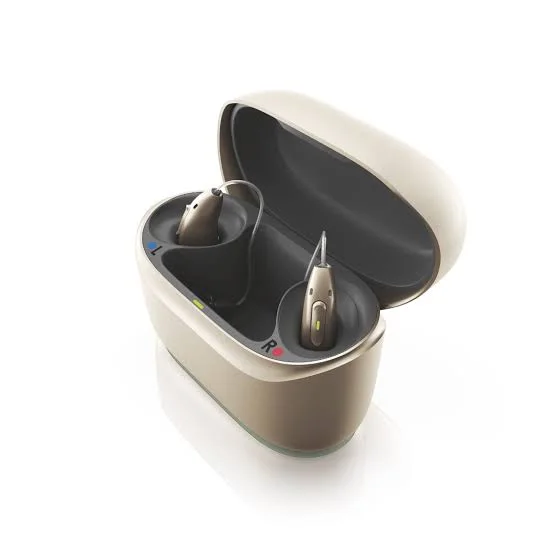
Receiver-in-Canal (RIC) hearing aids are smaller and discreet, suitable for older children and teens with mild to moderate loss.
In-the-Ear (ITE) hearing aids are rarely suggested for young children because the shell must be remade frequently as the ear grows.
Bone conduction hearing devices are used for children with conditions such as microtia, atresia or chronic ear discharge, where sound cannot travel through the normal ear canal.
Pediatric Hearing Aid Brands Available in India
Several globally trusted brands offer child-friendly models with safety features such as tamper-resistant battery doors, durable casings and fun colors.
Phonak: Known for pediatric-focused devices, strong speech clarity and compatibility with remote microphone systems for classrooms.
Oticon: Offers natural sound processing and robust, child-safe designs suited to active kids.
Signia: Provides reliable sound quality with smartphone connectivity for older children.
ReSound: Popular for strong wireless features and comfortable fittings.
Widex: Recognized for natural sound quality and clear speech perception.
Starkey and Unitron: Offer dependable options across different budgets.
The best brand depends on your child’s degree of hearing loss, age, lifestyle and budget. A good audiologist will recommend based on audiogram results, not brand popularity.
Pediatric Hearing Aid Price in Aurangabad
Pricing depends on technology level, brand, type and whether the aid is digital or programmable. The following are approximate market ranges in Indian rupees and may vary by model, offers and taxes. Always confirm the current price with your clinic.
Category | Approximate Price Range (per ear) |
|---|---|
Basic digital BTE | ₹15,000 – ₹30,000 |
Mid-range digital BTE | ₹30,000 – ₹60,000 |
Premium pediatric BTE | ₹60,000 – ₹1,20,000 |
RIC/RITE models | ₹35,000 – ₹1,00,000 |
Custom earmolds (each) | ₹500 – ₹2,500 |
Cost factors to keep in mind:
Technology level: Higher levels offer better noise handling and clearer speech in busy places.
Number of devices: Most children with bilateral loss need two hearing aids.
Accessories: Earmolds, batteries or rechargeable options, dry kits and remote microphones add to the total.
Follow-up care: Programming, tuning and regular checkups are essential for children.
Remember that the cheapest hearing aid is not always the best value. A properly fitted mid-range device will usually outperform a poorly programmed premium one.
Government Schemes and Support
India has programs that may help eligible families, such as the ADIP scheme for assistive devices and the Rashtriya Bal Swasthya Karyakram (RBSK) for child health screening. Eligibility depends on factors such as disability certification and family income. Ask your audiologist or local health office about the current process and documentation, as rules can change.
How to Choose a Pediatric Hearing Aid Clinic in Aurangabad
Fitting a hearing aid on a child is very different from fitting an adult. Look for:
A qualified pediatric audiologist with experience in child assessment and verification.
Proper diagnostic equipment including OAE, BERA and audiometry.
Real ear measurement and verification so the device is tuned to the child’s actual ear.
Multiple brands and options so recommendations are unbiased.
Strong aftercare including regular reprogramming, earmold replacement and counseling.
Clear pricing with no hidden charges.
Parent counseling and training on care, cleaning and daily use.
What to Expect at Your First Visit to EarMart
At EarMart, the experience is designed to be comfortable for both child and parent:
History and consultation: We discuss your concerns, birth history, ear infections and speech development.
Hearing assessment: Age-appropriate tests identify the type and degree of hearing loss.
Counseling: We explain the results in simple language and outline all suitable options.
Trial and fitting: Where appropriate, your child can try suitable devices so you can see the difference.
Programming and verification: The device is tuned to your child’s hearing profile.
Follow-up plan: Scheduled checkups track progress and adjust settings as your child grows.
Tips to Help Your Child Adjust to a Hearing Aid
Start with short wearing periods and build up gradually.
Keep your tone positive and celebrate wearing time.
Use a safety clip or pilot cap for infants and toddlers.
Clean the device and earmold daily and keep it dry.
Store hearing aids safely, away from pets and small children.
Talk, read and sing to your child often to build language.
Inform teachers so your child is seated near the front of the class.
Attend all follow-up visits, as hearing needs can change.
Care and Maintenance
Wipe the hearing aid daily with a soft dry cloth, use a dry kit at night to remove moisture, and check tubing and earmolds for blockage. Avoid water, extreme heat and hair products. Replace batteries on time, or charge rechargeable models nightly. Earmolds typically need replacement every few months in infants and less often as the child grows.
Why Choose EarMart for Pediatric Hearing Care in Aurangabad
EarMart focuses on honest guidance, child-friendly care and long-term support. Parents are never rushed into a decision. We explain every option clearly, from budget-friendly devices to advanced technology, so you can choose what truly suits your child. Our goal is simple: help your child hear, speak and thrive.
If you suspect hearing difficulty in your child, do not wait. Book a hearing evaluation at EarMart today and take the first step toward clearer communication.
Frequently Asked Questions (FAQs)
1. At what age can a child get a hearing aid?
Babies can be fitted with hearing aids as early as a few weeks to months old once hearing loss is confirmed through proper testing. Early fitting greatly improves speech outcomes.
2. What is the price of a pediatric hearing aid in Aurangabad?
Prices generally range from about ₹15,000 to ₹1,20,000 per ear depending on brand and technology. Earmolds and accessories cost extra. Contact EarMart for current pricing.
3. Which hearing aid brand is best for children?
Brands such as Phonak, Oticon, Signia, ReSound and Widex offer reliable pediatric models. The best choice depends on your child’s hearing loss and needs, not just the brand.
4. Do children need two hearing aids?
If both ears have hearing loss, two hearing aids are usually recommended because they help with sound direction, speech clarity and noise handling.
5. How often should a child’s hearing aid be checked?
Infants may need checkups every few weeks to months, while older children are typically reviewed every three to six months, or as advised by the audiologist.
6. Are hearing aids safe for children?
Yes. Pediatric hearing aids come with safety features like locking battery doors and durable casings. When fitted by a qualified audiologist, they are safe and effective.
7. Can a hearing aid cure my child’s hearing loss?
A hearing aid does not cure hearing loss, but it amplifies sound so the child can access speech and environmental sounds, supporting language development.
8. How long does a child’s hearing aid last?
With proper care, hearing aids typically last four to six years or more. Earmolds need more frequent replacement as the child grows.
9. Is there government help for hearing aids in Maharashtra?
Eligible families may get support through schemes like ADIP. Check eligibility and documentation with your audiologist or local authorities.
10. How do I book an appointment at EarMart?
You can visit or contact EarMart’s Aurangabad clinic to schedule a pediatric hearing evaluation and consultation.