How Hearing Aid Works: Parts, Technology & Types
Millions of people live with hearing loss, yet many put off getting help because they don’t understand how hearing devices actually work. If you have ever wondered how a tiny device behind your ear can turn muffled sounds into clear speech, you are in the right place.
This guide explains how a hearing aid works in plain language, covering the parts inside, the technology that powers it, and what to look for when choosing one. EarMart has put this together to help you make a confident, informed decision about your hearing health.
What Is a Hearing Aid?
A hearing aid is a small electronic device worn in or behind the ear. It picks up sounds from your surroundings, makes them louder and clearer, and delivers them into your ear so you can hear better.
It is important to know that a hearing aid does not cure or restore hearing. It makes the sounds your ear can still process easier to detect. Modern devices are far more advanced than simple amplifiers, because they can separate speech from noise, adapt to different places, and be adjusted to your personal hearing profile.
The Main Parts of a Hearing Aid
Whatever the style or brand, almost every hearing aid contains the same core components.
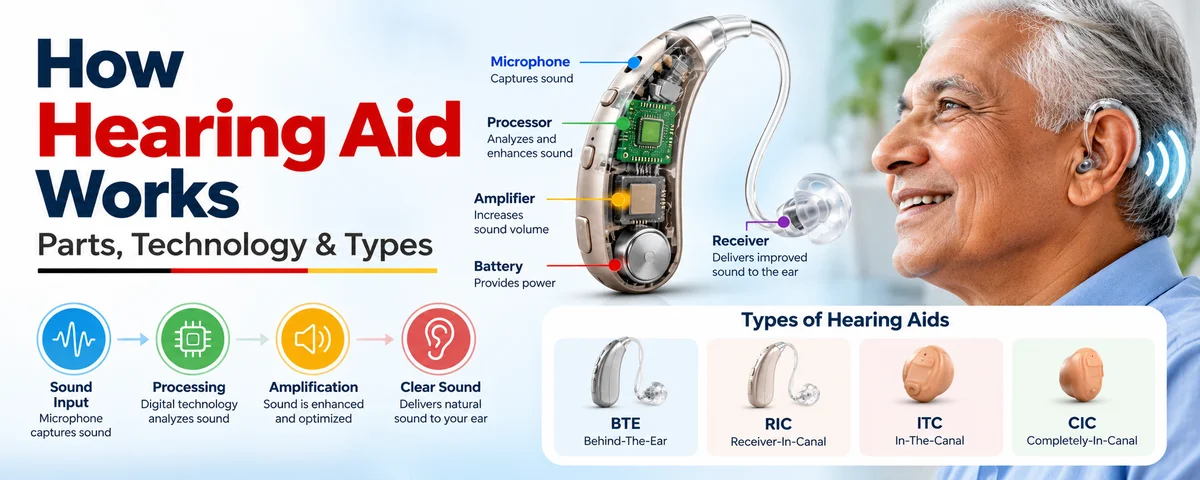
Microphone. The microphone captures sound waves from the environment, such as voices, traffic, music or television, and converts them into electrical signals. Many modern hearing aids use two or more microphones to help the device identify where sounds come from.
Processor (Amplifier Chip). This is the brain of the device. The processor analyzes the incoming signal, adjusts it according to your hearing test results, and decides which sounds to boost, soften or reduce.
Receiver (Speaker). After processing, the electrical signal is turned back into sound by the receiver, which delivers amplified sound into the ear canal.
Battery. Hearing aids run on either disposable zinc-air batteries or built-in rechargeable batteries. Rechargeable models have become very popular because they are convenient and easy to maintain.
Earmold or Dome. This part holds the device comfortably in place and directs sound into your ear. A good fit improves sound quality and prevents whistling.
Controls and Connectivity. Many devices include small buttons, volume controls, or Bluetooth connectivity that lets you adjust settings through a smartphone app.
How a Hearing Aid Works: Step by Step
Here is what happens inside the device in a fraction of a second.
Step 1: Sound is captured. The microphone picks up sound waves from around you and converts them into an electrical signal.
Step 2: The signal is digitized. In a digital hearing aid, the electrical signal is converted into digital data, which makes it much easier to analyze and fine-tune.
Step 3: The processor analyzes the sound. The chip identifies the characteristics of the sound, such as pitch, loudness and whether it is speech or background noise. It then applies settings programmed specifically for your hearing loss.
Step 4: Sound is enhanced. The processor amplifies the frequencies you struggle with. For example, many people lose high-pitched hearing first, so the device may boost those frequencies more than low ones. It can also reduce unwanted noise and control feedback.
Step 5: The signal is converted back to sound. The digital data is turned back into an electrical signal and sent to the receiver.
Step 6: Sound reaches your ear. The receiver plays the amplified sound into your ear canal. From there, it travels through the middle ear and inner ear to the auditory nerve, which sends the signal to the brain to be understood as meaningful sound.
All of this happens almost instantly, so the sound you hear feels natural and in real time.
Analog vs Digital Hearing Aids
Older analog hearing aids simply made all sounds louder. They were basic and often amplified background noise along with speech.
Digital hearing aids, which are now the standard, convert sound into digital data. This allows them to do much more:
Reduce background noise
Suppress whistling and feedback
Automatically adjust to different environments
Be programmed precisely for your hearing loss
Connect wirelessly to phones, televisions and other devices
This is why digital technology delivers clearer, more comfortable hearing in everyday situations like restaurants, meetings and family gatherings.
Smart Features in Modern Hearing Aids
Today’s devices offer far more than amplification. Common features include:
Noise reduction. The device lowers steady background sounds like fans or traffic so speech stands out.
Directional microphones. These focus on sounds in front of you, which helps in conversations.
Feedback cancellation. This prevents the annoying whistling sound that older devices were known for.
Bluetooth streaming. You can stream phone calls, music and video audio directly to your hearing aids.
Rechargeable batteries. You can charge overnight and avoid changing tiny batteries.
Telecoil. This picks up signals from compatible loop systems in public places like theaters and places of worship.
Smartphone apps. These let you change volume, switch programs and sometimes make fine adjustments yourself.
Types of Hearing Aids
Hearing aids come in several styles, each suited to different needs and levels of hearing loss.
Behind-the-Ear (BTE). The main case sits behind the ear and connects to an earmold or tube. BTE aids are powerful, durable and suitable for most degrees of hearing loss.
Receiver-in-Canal (RIC). Similar to BTE, but the receiver sits inside the ear canal. They are small, discreet and produce natural sound quality.
In-the-Ear (ITE). These are custom-made to fill the outer part of the ear. They are easier to handle and often include extra features.
In-the-Canal (ITC) and Completely-in-Canal (CIC). These are small, custom-fit devices that sit partly or deep inside the ear canal. They are very discreet but may offer fewer features due to their size.
The best style depends on your degree of hearing loss, ear shape, dexterity, lifestyle and budget.
Signs You May Need a Hearing Aid
You may benefit from a hearing test if you:
Often ask people to repeat themselves
Struggle to follow conversations in noisy places
Turn the television or phone volume up higher than others do
Find voices sound muffled or mumbled
Have trouble hearing on the phone
Feel tired or stressed after listening for long periods
Notice ringing in your ears (tinnitus)
Early treatment can protect your communication, relationships and overall wellbeing.
How to Choose the Right Hearing Aid
Choosing a hearing aid should always begin with a professional hearing test. The results show the type and degree of hearing loss and guide which technology will suit you best.
Consider these factors:
Degree of hearing loss: mild, moderate, severe or profound
Lifestyle: quiet home life, active social life or noisy workplace
Comfort and fit: the device should feel secure and natural
Features: Bluetooth, rechargeable batteries, noise control
Budget: prices vary widely, so compare value, warranty and after-sales support
Aftercare: regular adjustments and cleaning are essential
At EarMart, the goal is to make hearing care simple and accessible, helping you compare options and find a device that fits your hearing needs and your daily routine.
Hearing Aid Care and Maintenance Tips
A little daily care keeps your device working well for years:
Wipe the device with a soft, dry cloth each day
Keep it away from moisture, heat and hair products
Clean the microphone ports and earmold regularly
Store it in a dry case overnight
Replace wax guards and filters as recommended
Charge rechargeable models fully before use
Schedule regular check-ups for cleaning and adjustments
Final Thoughts
Understanding how a hearing aid works takes away much of the mystery. A microphone captures sound, a processor refines it, and a receiver delivers it clearly to your ear, all in a fraction of a second. With digital technology, today’s devices adapt to your surroundings, reduce noise and keep you connected to the people and moments that matter.
If you suspect hearing loss, do not wait. Get your hearing checked, explore your options, and take the first step toward clearer hearing with EarMart.
Frequently Asked Questions (FAQs)
1. How does a hearing aid work in simple words?
A hearing aid picks up sound with a microphone, makes it louder and clearer using a processor, and plays it into your ear through a speaker called a receiver.
2. Do hearing aids restore normal hearing?
No. Hearing aids do not cure hearing loss. They make sounds easier to hear and understand, but they cannot fully replicate natural hearing.
3. What are the main parts of a hearing aid?
The main parts are the microphone, processor, receiver, battery, and an earmold or dome. Many also include Bluetooth and controls.
4. Can hearing aids remove background noise?
Modern digital hearing aids reduce background noise and focus on speech, but they cannot remove all noise completely, especially in very crowded places.
5. How long does it take to get used to hearing aids?
Most people need a few weeks to adjust. Your brain has to relearn sounds it has not heard clearly for some time, so wearing them consistently helps.
6. How long do hearing aids last?
With proper care, most hearing aids last between 3 and 7 years. Regular cleaning and check-ups can extend their life.
7. Are rechargeable hearing aids better?
Rechargeable models are convenient because you avoid changing batteries, and they are a good choice if you prefer simple daily use. Disposable batteries may suit people who travel often or want longer use without charging.
8. Why does my hearing aid whistle?
Whistling, or feedback, usually happens when the device does not fit properly, there is earwax buildup, or the volume is too high. A professional adjustment can fix it.
9. Can I wear a hearing aid in one ear only?
It depends on your hearing test. If both ears have hearing loss, two hearing aids generally give better sound clarity and help you tell where sounds come from.
10. How do I know which hearing aid is right for me?
Start with a hearing test. A professional can recommend the style and features that match your hearing loss, lifestyle and budget.