Latest Advancements in Hearing Aid Technology
Latest Advancements in Hearing Aid Technology: What’s New and What Matters
Hearing aids today bear little resemblance to the bulky, whistling devices many people remember. Modern hearing aids are discreet, intelligent, wirelessly connected and increasingly capable of supporting overall health. If you or a loved one is considering hearing support, understanding the latest advancements in hearing aid technology will help you choose a device that truly fits your life.
In this guide, Earmart walks you through the most important innovations, what they mean in everyday situations, and how to decide which features are worth prioritising.
1. Artificial Intelligence and Deep Neural Networks
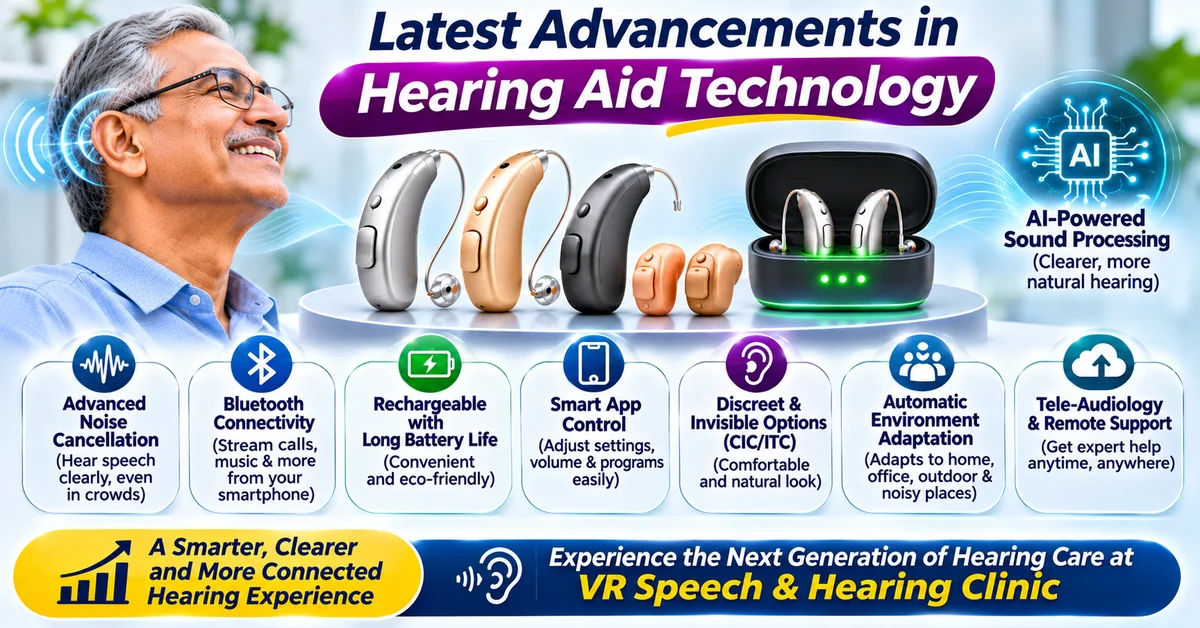
The biggest shift in recent years is the arrival of artificial intelligence inside the hearing aid itself. Earlier devices relied on fixed rules to decide what to amplify. Newer premium models use on-board deep neural networks trained on millions of real-world sound samples.
What this means for you:
Better speech clarity in noise. Restaurants, family gatherings and busy streets are the hardest places for people with hearing loss. AI-driven processing separates speech from background clatter far more effectively than older systems.
Automatic scene recognition. The device identifies whether you are in a quiet room, a car, a crowd or outdoors, and adjusts instantly without you touching a button.
Learning your preferences. Many models remember how you adjust volume or programs in certain places and gradually adapt to match your habits.
For many users, this is the difference between simply hearing sound and genuinely understanding conversation.
2. Smarter Directional Microphones and Noise Management
Directional microphone technology has advanced considerably. Instead of simply focusing on sounds in front of you, newer systems analyse the environment in real time and track the speaker, even when they move or when several people talk at once.
Key improvements include:
Adaptive beamforming that narrows or widens focus depending on the surroundings
Wind and reverberation reduction for outdoor use and echoey halls
Sudden-noise protection that softens harsh sounds like clanging utensils or traffic horns without muffling speech
This is especially valuable in busy environments, which are part of daily life for most of us.
3. Bluetooth Connectivity and LE Audio
Wireless streaming is now a standard expectation. Modern hearing aids connect directly to smartphones, televisions, tablets and computers, turning them into personalised wireless headphones.
Highlights:
Direct streaming of calls, music, videos and navigation prompts
Hands-free calling, with your own voice picked up clearly by the hearing aid microphones
Made-for-smartphone support across both iPhone and Android devices
Bluetooth LE Audio and Auracast a newer standard that lowers power use, improves sound quality and allows hearing aids to tune into public broadcasts in places like airports, theatres, gyms and places of worship
As Auracast infrastructure spreads, public announcements and shared audio will become far more accessible to hearing aid wearers.
4. Rechargeable Batteries That Last All Day
Fiddling with tiny disposable batteries has been one of the most common frustrations for hearing aid users, particularly those with limited dexterity. Rechargeable technology has largely solved this.
Lithium-ion batteries now commonly deliver a full day of use, including streaming, on a single overnight charge
Portable charging cases act as a power bank so you can top up while travelling
Quick-charge options provide several hours of use after a short charge
Fewer moving parts for easier handling and better sealing against moisture
For people who value convenience and sustainability, rechargeable models are often the best starting point.
5. Smaller, Sleeker and More Comfortable Designs
Advances in miniaturisation allow powerful processors to fit into very small shells. Today’s styles include:
Receiver-in-canal (RIC) devices that sit discreetly behind the ear
In-the-ear (ITE) and completely-in-canal (CIC) models that are nearly invisible
Invisible-in-canal (IIC) designs for mild to moderate hearing loss
Behind-the-ear (BTE) options with high power for severe loss
Improved materials, better ventilation and custom-fit shells also reduce the plugged-up feeling and the sound of your own voice booming inside your head, known as the occlusion effect.
6. Health and Wellness Tracking
Hearing aids are evolving from single-purpose devices into wearable health tools. Research increasingly links untreated hearing loss to social withdrawal, fatigue and cognitive strain, and manufacturers are responding with built-in sensors.
Depending on the model, features may include:
Step counting and activity tracking
Fall detection that can alert a chosen contact
Heart rate monitoring in certain advanced devices
Engagement and social activity insights shown in the companion app
These tools make hearing aids part of a broader healthy-ageing routine, not just a hearing solution.
7. Real-Time Translation and Transcription
One of the most exciting developments is language support. Some newer systems work with smartphone apps to provide live transcription of conversations, and some can assist with translating speech between languages. For people who travel, work in multilingual teams or live in diverse communities, these features open up new ways to communicate with confidence.
Accuracy and language availability vary by brand and app, so ask your hearing care professional to demonstrate before you decide.
8. Tinnitus Relief Features
Many people with hearing loss also experience tinnitus, a ringing or buzzing in the ears. Modern hearing aids can include tinnitus support such as:
Soothing sound masking like gentle waves, white noise or customisable tones
Notched or personalised sound therapy
App-based relaxation and sleep tools
Amplifying everyday sounds alone often reduces how noticeable tinnitus feels, and these added tools offer extra relief.
9. Remote Care and Smartphone Apps
Companion apps have transformed how people manage their hearing aids.
Self-adjustment of volume, bass, treble and programs
Remote fine-tuning in which your audiologist adjusts settings through a secure connection, saving you a trip
Find-my-hearing-aid location tools
Usage tracking and maintenance reminders
Tele-audiology is particularly helpful for those who live far from clinics, have mobility challenges or simply have busy schedules.
10. Greater Access: Over-the-Counter and Affordable Options
Regulatory changes in some countries, such as the introduction of over-the-counter hearing aids in the United States, have increased competition and brought down prices for adults with mild to moderate hearing loss. This trend has encouraged more people to seek help earlier. Still, a professional hearing test remains the best way to understand your hearing profile, rule out medical causes and ensure the right fit and programming.
How to Choose the Right Hearing Aid
With so many options, focus on your lifestyle rather than a long list of specifications. Ask yourself:
How active is my social life? If you often attend gatherings or eat out, prioritise strong noise management and AI processing.
How do I use my phone and TV? Choose reliable Bluetooth streaming and LE Audio compatibility.
How comfortable am I with small batteries? Rechargeable models offer simplicity.
Do I have tinnitus? Look for built-in therapy features.
What is my budget? Advanced features cost more, but mid-range models often cover everyday needs very well.
Do I need ongoing support? Good aftercare, fine-tuning and warranty matter as much as the device itself.
Most importantly, begin with a comprehensive hearing evaluation. The best technology is the one properly fitted and programmed for your specific hearing loss.
Final Thoughts
The latest advancements in hearing aid technology, from AI-powered speech clarity and Bluetooth LE Audio to rechargeable power, health tracking and tinnitus support, are helping people stay connected to the conversations and moments that matter. Hearing care is no longer only about volume; it is about clarity, comfort and quality of life.
At Earmart, we believe everyone deserves access to modern hearing solutions along with honest guidance and dependable support. If you have noticed trouble following conversations, frequently ask people to repeat themselves or turn the TV up louder than before, it may be time for a hearing check. Early action leads to better outcomes and a smoother adjustment.
Frequently Asked Questions (FAQs)
1. What is the newest technology in hearing aids?
The newest developments include AI-powered deep neural network processing, Bluetooth LE Audio with Auracast, rechargeable lithium-ion batteries, built-in health sensors, live transcription and advanced tinnitus therapy.
2. Are AI hearing aids worth it?
For many people, yes. AI-based hearing aids tend to perform better in noisy environments and adjust automatically to different settings, which makes conversations easier and reduces listening fatigue.
3. Can hearing aids connect to my smartphone and TV?
Yes. Most modern hearing aids stream calls, music and video audio directly from compatible smartphones, and many connect to TVs through Bluetooth or a small streaming accessory.
4. How long do rechargeable hearing aid batteries last?
Most rechargeable models last around 16 to 30 hours per charge depending on the model and how much you stream. Over time, battery capacity can gradually decline, so ask about battery replacement and warranty.
5. Do hearing aids help with tinnitus?
Many do. Amplification can make tinnitus less noticeable, and several models include sound therapy features designed to provide relief.
6. What is Auracast?
Auracast is a Bluetooth broadcast technology that allows hearing aids and earbuds to receive audio from public venues, TVs and announcements, improving accessibility in shared spaces.
7. How often should I upgrade my hearing aids?
Most people replace hearing aids every four to six years, though this depends on changes in your hearing, lifestyle needs and how well the device is maintained.
8. Are over-the-counter hearing aids as good as prescription ones?
They can be suitable for adults with mild to moderate hearing loss, but they offer less personalised fitting and support. A professional evaluation is recommended to choose the right option.
9. Can hearing aids track my health?
Some can. Certain models include step counting, activity tracking and fall detection, with a few offering additional wellness features.
10. How do I know if I need a hearing aid?
Signs include difficulty following conversations in noise, asking people to repeat themselves, turning up the volume, and feeling that others mumble. A hearing test is the best way to know for sure.