Where Can I Find a Reputable Specialist for Hearing Tests in My City
Where Can I Find a Reputable Specialist for Hearing Tests in My City?
If you have started turning up the TV volume, asking people to repeat themselves, or avoiding noisy restaurants, you may be wondering where to get your hearing checked. A quick search for “hearing test near me” returns dozens of options, and it is hard to know which one deserves your trust.
Hearing is closely linked to communication, safety, relationships, and even brain health. That makes the choice of specialist important. This guide explains how to find a reputable hearing test specialist in your city, what qualifications to look for, what happens during an assessment, and why VR Speech and Hearing Clinic is a dependable option.
Why a Proper Hearing Test Matters
Hearing loss usually develops slowly. Many people go years without noticing because the brain adapts to the gradual change. By the time family members point it out, the loss may already affect daily life.
Untreated hearing loss has been associated with social withdrawal, difficulty at work, frustration, and a higher risk of cognitive decline in older adults. In children, even mild hearing loss can delay speech and language development and affect school performance.
A professional hearing test finds out whether you have hearing loss, what type it is, how severe it is, and what can be done about it. Online tests and phone apps can be a starting point, but they cannot replace a full evaluation by a trained specialist in a controlled environment.
Who Is the Right Specialist for a Hearing Test?
Several professionals work in ear and hearing care, and knowing who does what helps you book the right appointment.
Audiologist: The primary expert for hearing tests. Audiologists are trained to diagnose hearing and balance disorders, interpret test results, and recommend treatment such as hearing aids or therapy.
ENT specialist (otolaryngologist): A medical doctor who treats conditions of the ear, nose, and throat. You may need one if your hearing loss is caused by infection, earwax impaction, a perforated eardrum, or another medical problem.
Speech-language pathologist: A professional who helps with speech, language, voice, and communication difficulties. Hearing loss and speech problems are often connected, especially in children.
A clinic that combines audiology and speech services under one roof is especially useful, because hearing and speech are closely linked. That is one reason a speech and hearing clinic is often the best place to start.
7 Signs of a Reputable Hearing Test Specialist
Not every clinic offers the same quality of care. When comparing options in your city, look for these markers.
1. Recognized Qualifications and Registration
A reputable audiologist holds a relevant degree in audiology or speech and hearing and is registered with the appropriate professional council or body in your country. Do not hesitate to ask about qualifications and registration. A trustworthy clinic will answer openly.
2. Modern, Calibrated Equipment
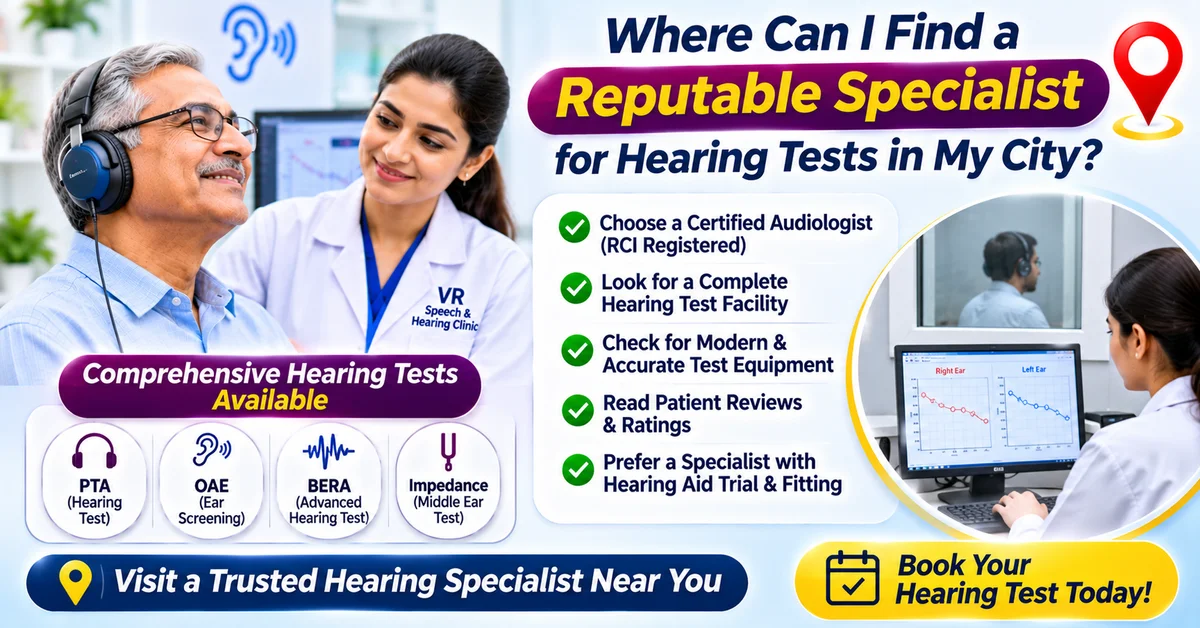
Accurate results depend on well-maintained equipment. Look for a clinic with a sound-treated test room, a calibrated audiometer, and the ability to run additional tests such as tympanometry and otoacoustic emissions when needed.
3. A Complete Testing Process
A thorough evaluation does not stop at a simple beep test. It should include a case history, an ear examination, pure-tone audiometry, speech testing, and middle ear assessment where required. If a clinic offers only a quick screening and tries to sell a device straight away, be cautious.
4. Honest, Unbiased Advice
A good specialist recommends what you need, not the most expensive product. If your hearing is normal, they should say so. If you need a hearing aid, they should explain the options clearly, including different technology levels and budgets.
5. Positive Reviews and Word of Mouth
Check online reviews, but also ask friends, family, and your family doctor. Look for patterns in feedback, such as patience, clear explanations, and good follow-up care.
6. Follow-Up and Aftercare Support
Hearing care does not end after the test. If you need hearing aids, you will require fitting, fine-tuning, cleaning guidance, and regular check-ups. A reputable clinic offers ongoing support.
7. A Comfortable, Welcoming Environment
Whether you are an anxious child or an elderly parent, you should feel at ease. Clear communication, patience, and a friendly approach make a real difference to the quality of testing and your experience.
What to Expect During a Hearing Test
Knowing the process can reduce nervousness. A typical visit includes the following steps.
Consultation and history: The audiologist asks about your symptoms, medical history, noise exposure, family history, and any ringing in the ears (tinnitus) or dizziness.
Ear examination: The ear canal and eardrum are checked for wax, infection, or blockage.
Pure-tone audiometry: You wear headphones and press a button when you hear tones at different pitches and volumes. This maps your hearing sensitivity.
Speech audiometry: You repeat words at various volumes to show how well you understand speech, not just how well you detect sound.
Middle ear testing: Tympanometry checks how well your eardrum and middle ear are working.
Results and counseling: The specialist explains your audiogram in simple language and discusses next steps, which may include monitoring, medical referral, hearing aids, or rehabilitation.
Most hearing tests take around 30 to 60 minutes and are painless and non-invasive.
Why Choose VR Speech and Hearing Clinic?
If you are looking for a dependable hearing test specialist in your city, VR Speech and Hearing Clinic is a strong choice. The clinic focuses on accurate diagnosis, clear communication, and personalized care for people of all ages.
Here is what patients can look forward to:
Comprehensive hearing evaluation: Assessments are carried out step by step, so you get a complete picture of your hearing health rather than a rushed screening.
Combined speech and hearing expertise: Because the clinic covers both hearing and speech, it can support children with delayed speech, adults with communication difficulties, and seniors adjusting to hearing loss, all in one place.
Patient-first approach: Results are explained in plain, easy-to-understand language, and you are involved in every decision about your care.
Guidance on solutions: Whether you need monitoring, therapy, or hearing aids, you receive honest recommendations suited to your lifestyle and budget.
Support beyond the test: Counseling, follow-up visits, and ongoing guidance help you get the most from your treatment.
To confirm current services, timings, and appointment availability, contact the clinic directly.
When Should You Book a Hearing Test?
You do not need to wait for severe symptoms. Consider scheduling an appointment if you notice any of the following:
You often ask people to repeat themselves. You find it hard to follow conversations in noisy places. You turn the TV or phone volume higher than others do. You hear ringing, buzzing, or humming in your ears. You feel muffled hearing or a sense of fullness in the ear. You have been exposed to loud noise at work or through headphones. Your child is not responding to sounds or is late in speaking. You have had repeated ear infections or ear pain.
As a general guideline, adults over 50 should have their hearing checked every few years, and sooner if symptoms appear. Newborns and children should be screened according to pediatric guidance.
How to Prepare for Your Appointment
A little preparation makes the visit smoother. Write down your symptoms and when they started. Bring a list of any medications you take. Note any family history of hearing loss. If possible, bring a family member who can describe how your hearing difficulties affect daily life. Avoid exposure to loud noise for at least 24 hours before the test for the most accurate results.
Questions to Ask Before You Book
Ask what qualifications the specialist holds, which tests are included in the evaluation, how long the appointment takes, whether a written report will be provided, and what follow-up support is available. Clear, confident answers are a good sign of a reputable clinic.
Final Thoughts
Finding a reputable specialist for hearing tests in your city comes down to qualifications, thorough testing, honest advice, and caring follow-up. Do not ignore early signs of hearing difficulty. The sooner you get tested, the more options you have, and the better your quality of life will be.
If you want a trusted, patient-focused team for your hearing and speech needs, VR Speech and Hearing Clinic is a reliable place to start. Book your hearing test today and take the first step toward clearer communication.
Frequently Asked Questions (FAQs)
1. Where can I get a hearing test in my city?
You can get a hearing test at a speech and hearing clinic, an audiology center, an ENT clinic, or a hospital audiology department. Choose a place with a qualified audiologist and proper testing equipment, such as VR Speech and Hearing Clinic.
2. Which doctor should I see for a hearing test?
Start with an audiologist, who specializes in diagnosing hearing loss. If a medical issue such as infection or blockage is suspected, you may be referred to an ENT specialist.
3. How long does a hearing test take?
A complete evaluation usually takes 30 to 60 minutes, depending on which tests are needed.
4. Is a hearing test painful?
No. Hearing tests are non-invasive and painless. You listen to sounds through headphones and respond when you hear them.
5. How often should I get my hearing tested?
Adults should consider a baseline test and then check every few years after age 50, or sooner if you notice changes. Anyone with symptoms should book an appointment promptly.
6. Can children have their hearing tested?
Yes. Specialized child-friendly tests are available for infants and young children. Early testing is important because hearing affects speech and language development.
7. Are online hearing tests reliable?
Online tests can give a rough idea, but they are not a substitute for a clinical evaluation in a sound-treated room with calibrated equipment.
8. Do I need a referral for a hearing test?
In most cases, no. You can book directly with an audiologist or hearing clinic, though some insurance plans may have their own requirements.
9. What if my test shows hearing loss?
Your audiologist will explain the type and degree of loss and recommend options, which may include medical treatment, hearing aids, therapy, or regular monitoring.
10. How do I choose the best hearing clinic near me?
Check the specialist’s qualifications, the range of tests offered, patient reviews, honesty of advice, and availability of follow-up care.