Most Expensive Hearing Aid: Top Premium Models and Prices | EarMart
Most Expensive Hearing Aid: What Premium Models Cost and Whether They’re Worth It
If you’ve searched for the most expensive hearing aid, you’ve probably noticed that prices vary enormously. Some devices cost a few hundred dollars. Others cost as much as a used car. So what separates a budget device from a flagship, and does the higher price buy you better hearing?
This guide explains what makes a hearing aid expensive, which premium models sit at the top of the market, what you actually get for your money, and how to decide if a high-end device is right for you. It is written for people who want clear answers before spending serious money on their hearing.

How Much Does the Most Expensive Hearing Aid Cost?
Prices change by brand, region, and clinic, so treat these figures as general ranges rather than fixed quotes.
Most premium hearing aids from major manufacturers cost roughly $4,000 to $8,000 per pair. Some flagship models, especially when bundled with extended care, fitting sessions, and long warranties, can push the total toward $10,000 or more. Entry-level prescription devices and over-the-counter options usually sit far below that, often between a few hundred and a couple of thousand dollars per pair.
The word “most expensive” can mean two things. It can mean the highest list price of a single device, or the highest total cost once professional services are included. Many clinics sell hearing aids as a bundle. The price covers the device, hearing tests, custom programming, follow-up adjustments, cleaning, and a warranty. This is why the same model can have very different prices at two different providers.
Why Are Some Hearing Aids So Expensive?
A premium hearing aid is closer to a wearable computer than a simple amplifier. Several factors drive the cost.
Advanced processing chips. Top-tier devices use powerful processors that analyze sound thousands of times per second. They separate speech from background noise, reduce wind and sudden loud sounds, and adjust automatically as you move between environments.
Artificial intelligence and machine learning. Many flagship models now use AI-driven noise management. Some use deep neural networks trained on huge sound libraries to decide what you want to hear and what should fade into the background.
Research and development. Manufacturers invest heavily in audiology research, and those costs are built into the price of the highest tiers.
Premium materials and design. Compact housings, moisture and dust resistance, rechargeable lithium-ion batteries, and comfortable custom shells all add cost.
Connectivity. High-end devices stream calls, music, and TV audio directly from phones and other devices. Many support newer wireless standards and hands-free calling.
Professional services. Fittings, real-ear measurements, follow-up visits, and long-term support are major parts of the final price.
Types of Premium Hearing Aids
The style you choose also affects the price.
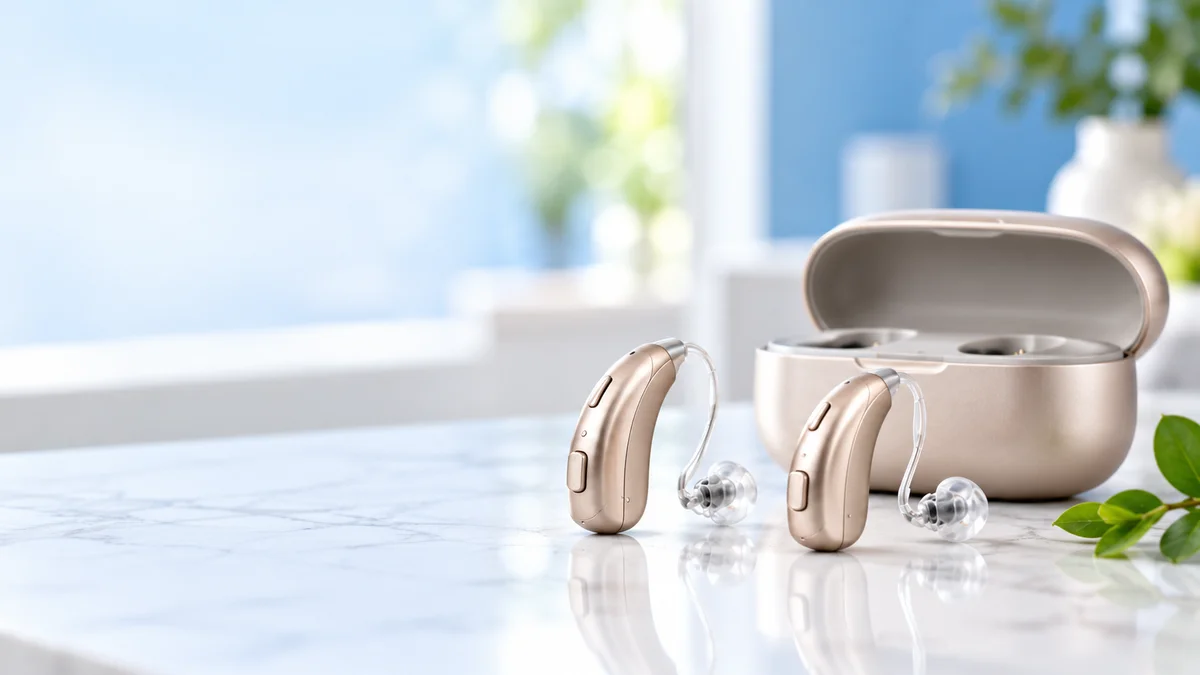
Receiver-in-canal (RIC) models. These sit behind the ear with a thin wire to a speaker in the ear canal. They are the most popular premium style, offering strong sound quality and flexibility.
Behind-the-ear (BTE) models. These are larger and often more powerful. They suit people with severe to profound hearing loss and often carry big batteries and advanced features.
In-the-ear (ITE) and in-the-canal (ITC) models. Custom-molded to your ear, these are discreet but can cost more because of the made-to-order shells.
Invisible-in-canal (IIC) models. These sit deep in the ear canal and are nearly invisible. Their custom manufacturing and tiny components often make them among the pricier styles.
Leading Premium Hearing Aid Families
The top of the market is dominated by a handful of established manufacturers. The flagship lines below are regularly mentioned in the premium category. Exact model names and prices change with each product cycle, so check current availability before you buy.
Phonak premium lines. Phonak is known for strong speech-in-noise performance and for introducing new form factors, including devices with advanced sensors and a very high level of processing power.
Oticon premium lines. Oticon focuses on a brain-first approach to hearing, using deep neural networks to deliver a fuller, more natural soundscape in busy environments.
Signia premium lines. Signia is recognized for strong own-voice processing and for features that separate your voice from conversation partners, which helps with the “my voice sounds strange” complaint.
Starkey premium lines. Starkey combines hearing technology with health and activity tracking features, plus fall detection in some models, which appeals to older adults and active users.
ReSound premium lines. ReSound is known for natural sound quality, strong smartphone integration, and comfortable, discreet designs.
Widex premium lines. Widex is popular with musicians and music lovers because of its focus on clean, low-delay sound that preserves the character of music.
What Do You Get for the Extra Money?
A higher price usually buys these benefits.
Better hearing in noise. This is the biggest reason people upgrade. Restaurants, family gatherings, and meetings are where entry-level devices struggle most and premium devices shine.
More natural sound. Premium processors preserve more detail, so speech sounds clearer and music sounds richer.
Automatic adjustments. Flagship models adapt to your surroundings without constant button pressing or app tweaking.
Rechargeable batteries. Many premium models offer a full day of use on one charge, with portable charging cases for travel.
Extra smart features. These can include fall detection, step counting, language translation, voice assistant access, and remote adjustments by your hearing professional.
Longer warranties and services. Some packages include multi-year warranties, loss and damage coverage, and unlimited adjustments.
Are Expensive Hearing Aids Worth It?
The honest answer is that it depends on your hearing loss and your lifestyle.
A premium device is often worth it if you have a busy social or professional life, spend time in noisy places, love music, want seamless phone and TV streaming, or have more complex hearing loss that benefits from advanced processing.
A mid-range or basic device may be enough if you mostly spend time in quiet settings, have mild hearing loss, or are on a tight budget. Many people are happy with mid-tier models because the core hearing correction is similar across a manufacturer’s line. The main differences are in how well the device handles complex environments.
The best hearing aid is not necessarily the most expensive one. It is the one that is properly fitted, comfortable, matched to your hearing test, and that you will wear every day. A well-fitted mid-range device usually beats a poorly fitted flagship.
How to Choose the Right Hearing Aid for Your Budget
Follow these steps to avoid overspending.
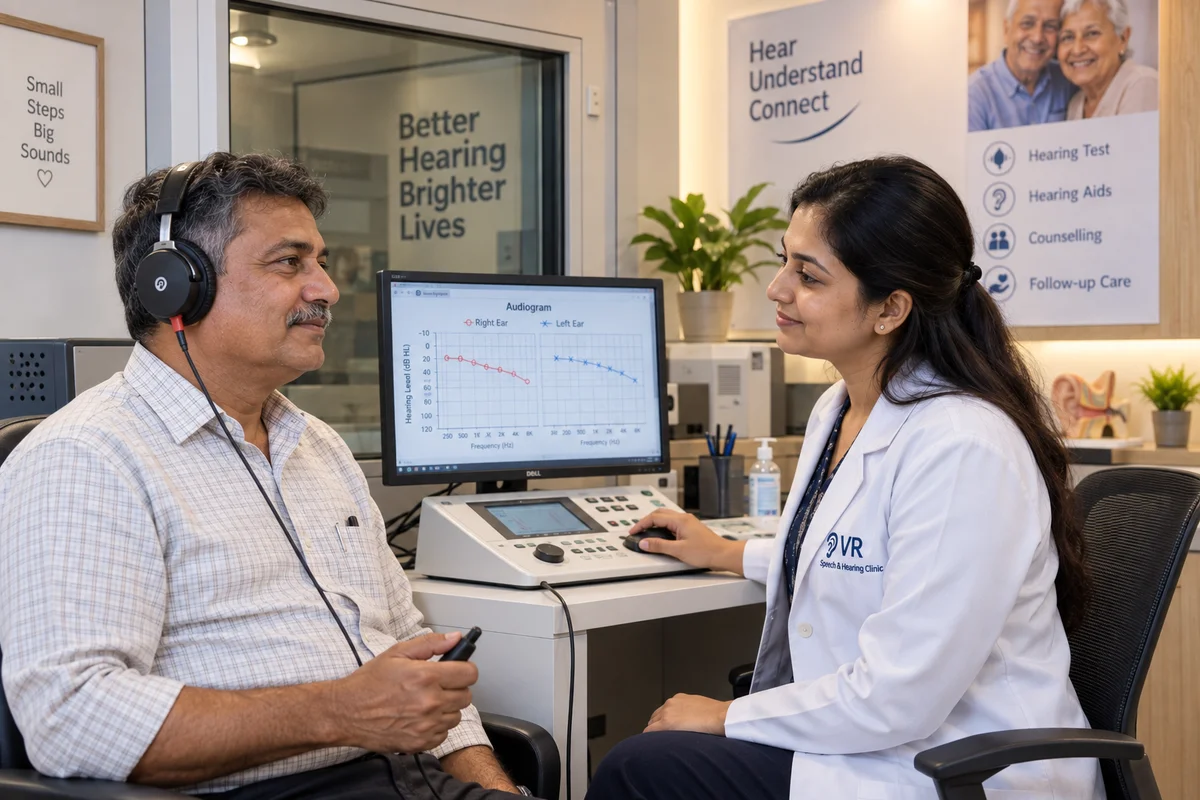
Get a professional hearing test. Your audiogram shows the type and degree of your hearing loss, which determines what technology you need.
List your daily situations. Think about where you struggle most, such as restaurants, phone calls, TV, meetings, or group conversations.
Set a realistic budget. Decide on a range, then ask what is included in the price, such as fittings, follow-ups, and warranty.
Compare technology levels. Most brands offer basic, standard, advanced, and premium tiers. Ask what each tier changes in practice.
Ask about a trial period. A trial of 30 to 60 days lets you test the device in real life before committing.
Check insurance and financing. Some insurers, employers, and health savings accounts help cover costs, and many providers offer payment plans.
Consider long-term costs. Think about battery replacements, repairs, and the typical lifespan, which is often around five to seven years.
Tips to Protect Your Investment
Expensive hearing aids deserve good care. Clean them daily with a soft, dry cloth, keep them away from moisture and extreme heat, store them in their charging case or a dry box overnight, and attend regular check-ups. Consider loss and damage coverage, since a single lost device can be costly to replace.
Shop Smarter with EarMart
Whether you are comparing flagship models or looking for the best value in a mid-range device, EarMart makes the process easier. Browse hearing solutions, compare features side by side, and find a device that fits both your hearing needs and your budget. Before any purchase, speak with a qualified hearing professional so your device is programmed correctly for your hearing profile.
Final Thoughts
The most expensive hearing aid is not always the best choice for everyone, but premium models do offer real advantages in noisy environments, sound quality, and smart features. If your lifestyle demands top performance, investing in a flagship device can be worthwhile. If not, a well-chosen mid-range device with good professional support may serve you just as well for far less money. Start with a hearing test, define your needs, and choose the technology that helps you hear and connect with the people around you.
Frequently Asked Questions (FAQs)
1. What is the most expensive hearing aid?
The priciest models come from major manufacturers’ flagship lines and typically cost several thousand dollars per pair. With bundled services and long warranties, the total can reach around $10,000 or more.
2. Why are hearing aids so expensive?
Costs reflect advanced processors, AI features, research and development, small high-quality components, and professional services like fittings, programming, and follow-up care.
3. Are expensive hearing aids better than cheaper ones?
They often perform better in noisy settings and offer extra features. For mild hearing loss in quiet environments, a mid-range device may work just as well.
4. How long do premium hearing aids last?
Most last about five to seven years with proper care, though batteries and some components may need servicing sooner.
5. Does insurance cover hearing aids?
Coverage varies widely by plan and country. Some insurers, employers, and health spending accounts help with costs, so check your policy and ask your provider.
6. Are over-the-counter hearing aids a good alternative?
They can work for adults with mild to moderate hearing loss who want a lower-cost option. They are not suitable for everyone, and a hearing test is still recommended.
7. What should I look for before buying a high-end hearing aid?
Look for a professional fitting, a trial period, a clear warranty, battery type, noise-handling ability, connectivity, and ongoing support.
8. Can I buy hearing aids on EarMart?
EarMart helps you explore and compare hearing solutions so you can make an informed decision. Always consult a hearing professional to confirm the right device for your hearing loss.